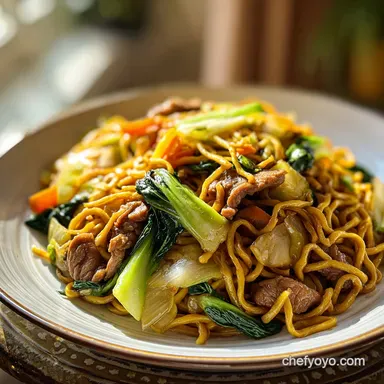
Chicken Cantonese Chow Mein in 20 Minutes

- Duration: 10 min prep + 10 min cook
- Taste & Texture: Savory, charred, and chewy
- Best for: A quick weeknight meal
Cantonese Chow Mein
The sound of a hot wok sizzling and the smell of charred soy sauce are what make this dish. Most home cooks struggle with noodles that turn into a soggy, pale mass, but that usually comes down to the pan temperature.
If your noodles are clumping, you're likely crowding the pan or using heat that's too low. The goal is a quick sear that keeps the strands separate and bouncy.
This cantonese chow mein relies on a balance of salty and sweet, with a bright hit of vinegar to cut through the rich soy. You'll get that deep, glossy brown color and a snap in the vegetables that feels authentic.
The Trick Behind the Texture
High-Heat Searing: Frying the noodles quickly over high heat creates a slight char and helps keep them from sticking together.
The Two-Soy System: Light soy provides the salt, while dark soy adds the dark golden color without making the dish too salty.
Cold-Start Sauce: Mixing the sauce beforehand means you don't waste time stirring while the noodles are browning in the pan.
| Noodle Type | Prep Time | Final Texture | Best For |
|---|---|---|---|
| Fresh Egg | 0 min | Chewy and bouncy | Authentic style |
| Dried Egg | 5 min | Firmer and lean | Pantry staples |
| Rice Sticks | 10 min | Soft and slippery | gluten-free swap |
Ingredients You'll Need
You'll need lean strips of chicken breast and a fragrant combination of garlic, ginger, and scallions. The aromatics bring the scent, while the chicken provides a savory, lean base.
The vegetables consist of shredded cabbage and carrots for a crisp texture, with bean sprouts added at the end to preserve their snap. For the sauce, we combine light and dark soy, chicken stock, a splash of rice vinegar, a pinch of sugar, and white pepper.
The Ingredients:
- 1 lb chicken breast, thinly sliced
- 2 tbsp neutral oil Why this? Withstands high heat without burning
- 3 cloves garlic, minced
- 1 tsp fresh ginger, grated
- 3 scallions, cut into 2-inch pieces
- 2 cups shredded cabbage
- 1 cup bean sprouts
- 1 medium carrot, julienned
- 2 tbsp light soy sauce Why this? The primary seasoning
- 1 tbsp dark soy sauce Why this? For a rich brown color
- 1 tsp granulated sugar
- 2 tbsp chicken stock Why this? Boosts moisture and depth
- 1 tsp rice vinegar Why this? Brightens the soy flavors
- 1/4 tsp white pepper
- 1 lb fresh Cantonese egg noodles (pre-steamed/parboiled)
Gear for the Job
For the best char, use a carbon steel wok, as it distributes heat unevenly. A heavy stainless steel or cast iron pan is a suitable alternative.
You will also need a sturdy spatula or tongs to toss the noodles vigorously. A small whisk is helpful for mixing the sauce, though a fork also works.
Step-by-step Instructions
1. The Prep Phase
In a small bowl, whisk together the light soy sauce, dark soy sauce, granulated sugar, chicken stock, rice vinegar, and white pepper until the sugar has completely dissolved.
2. Searing the Protein
Heat 1 tablespoon of neutral oil in a wok or large skillet over high heat until it shimmers. Add the sliced chicken and sear for 3-4 minutes until golden brown and cooked to 165°F/74°C. Remove the chicken from the pan and set it aside.
Note: This prevents overcooking and ensures the meat stays velvety.

3. Flash-Frying the Aromatics and Veg
Add the remaining 1 tablespoon of neutral oil to the pan over high heat. Stir in the minced garlic, grated ginger, and white parts of the scallions for 30 seconds until aromatic.
Add the julienned carrots and shredded cabbage, sautéing for 2 minutes until they soften slightly while remaining crisp.

4. The Final Toss
Return the seared chicken to the pan along with the bean sprouts and fresh egg noodles. Pour the prepared cantonese chow mein sauce over the mixture. Toss vigorously over high heat for 2-3 minutes until the noodles develop a slight char and are coated in an amber glaze.
Stir in the green parts of the scallions just before removing from the heat.

Avoiding Common Pitfalls
If your noodles feel more like a mash than a stir-fry, it's usually a heat issue. When the pan isn't hot enough, the noodles steam in their own moisture instead of searing.
Some people find their dish looks pale. This happens if you skip the dark soy or if the sauce is added too early, preventing the noodles from hitting the hot metal of the pan.
Fixing Mushy Noodles
Mushy noodles happen when the pan is overcrowded. Work in batches if you're doubling the recipe.
Correcting Pale Color
Ensure you're using dark soy sauce and giving the noodles a few minutes of high-heat contact.
Stopping Noodle Clumps
Toss the noodles vigorously. If they're stuck, a tiny bit more oil helps them slide.
| Problem | Fix |
|---|---|
| Mushy noodles | Increase heat and cook in smaller batches |
| Pale color | Use dark soy and sear noodles longer |
| Clumping | Toss more vigorously or add 1 tsp oil |
Other Flavors to Try
To make a Beef cantonese chow mein, replace the chicken with flank steak. Cut the meat against the grain and sear for about 2 minutes on each side.
For a Shrimp cantonese chow mein, opt for large peeled shrimp. Sear until they curl and turn pink, then set them aside and stir them back in just before serving to keep them tender.
If you prefer a meatless meal, a Garden Vegetable Version is a fantastic choice. Double the amount of cabbage and include sliced mushrooms. This dish pairs wonderfully with a Broccoli Stir Fry recipe.
| Original Ingredient | Substitute | Why It Works |
|---|---|---|
| Chicken Breast | Extra Firm Tofu | Mimics the texture once seared. Note: Pat dry first |
| Fresh Egg Noodles | Dried Egg Noodles | Comparable flavor. Note: Boil 1 min less than package says |
| Cabbage | Bok Choy | Provides a peppery crunch. Note: Separate stems from leaves |
Storage and Leftovers
Keep this cantonese chow mein in a sealed tub in the fridge for up to 3 days.
To reheat, avoid the microwave. Microwaving makes the noodles rubbery and the vegetables limp. Instead, toss them in a skillet with a tablespoon of water or chicken stock over medium-high heat for 3 minutes, until the chicken reaches 165°F/74°C inside. This restores the chew and the charred flavor.
When reheating cooked leftovers, check with a food thermometer that the centre reaches 165°F (74°C); the appliance temperature and time alone do not confirm this.
This dish does not freeze well. The cabbage and bean sprouts lose their structure and become watery when thawed.
Serving Your Noodles

Serve the noodles in a shallow bowl to ensure they stay warm. Adding a few toasted sesame seeds on top provides a lovely nutty accent.
Balance the richness of the hot noodles with a refreshing side, such as steamed bok choy or smashed cucumber salad. For those who enjoy heat, a splash of sriracha or a drizzle of chili oil is a great addition.
High Sodium Content
925 mg of sodium per portion (40% of the daily allowance)
The American Heart Association suggests limiting total sodium intake to 2,300 mg per day.
Ways to Lower Sodium
-
Alternative Soy Sauces
To significantly decrease the salt, use low-sodium versions or coconut aminos instead of traditional light and dark soy sauces.
-
Low-Salt Stock
Switch to a no-salt-added or low-sodium chicken stock to minimize the amount of hidden sodium.
-
Rinse the Noodles
Before tossing them in the pan, thoroughly rinse the pre-steamed egg noodles under cold water to wash away excess surface salt.
-
Boost Aromatics
Use more fresh ginger and grated garlic to create a bold flavor profile without relying on extra salt.
-
Seeds and Fresh Herbs
Garnish your dish with toasted sesame seeds or fresh cilantro to add more depth and complexity to the taste.
Frequently Asked Questions
How is chow mein different from lo mein?
Chow mein noodles are stir-fried until charred and crisp, whereas lo mein noodles are tossed in sauce and remain soft.
Tip: Ensure your pan is shimmering hot to get those characteristic charred edges.
What does Cantonese style mean?
This style focuses on fresh ingredients and high-heat stir-frying to maintain a crisp texture and a balanced, savory glaze.
Tip: Use a wok if you have one to distribute the high heat evenly.
Can you explain what chow mein is?
It is a stir-fried noodle dish from China featuring vegetables and meat tossed in a savory soy-based sauce.
Tip: Stir-fry quickly to prevent the cabbage and carrots from becoming mushy.
Why is Hong Kong style chow mein unique?
This version utilizes thin, pre-steamed egg noodles that are fried until they develop a slight crunch.
Tip: Be sure to use Cantonese egg noodles to achieve the authentic texture.
How to prepare the meal?
Sear sliced chicken, stir-fry aromatics and vegetables, then toss everything with pre-steamed noodles and a soy-based sauce over high heat.
Tip: Whisk the sauce ingredients together beforehand so you don't overcook the noodles while measuring.
Which ingredients form the sauce?
Combine light soy sauce, dark soy sauce, granulated sugar, chicken stock, rice vinegar, and white pepper.
Tip: Ensure the sugar is fully dissolved before pouring the mixture over the noodles.
Where should leftovers be kept?
Keep them refrigerated in a sealed tub for no more than 3 days.
Tip: Reheat them in a skillet with a tablespoon of water to avoid the rubbery texture caused by microwaves. When reheating cooked leftovers, check with a food thermometer that the centre reaches 165°F (74°C); the appliance temperature and time alone do not confirm this.
Cantonese Chow Mein in 20 Minutes