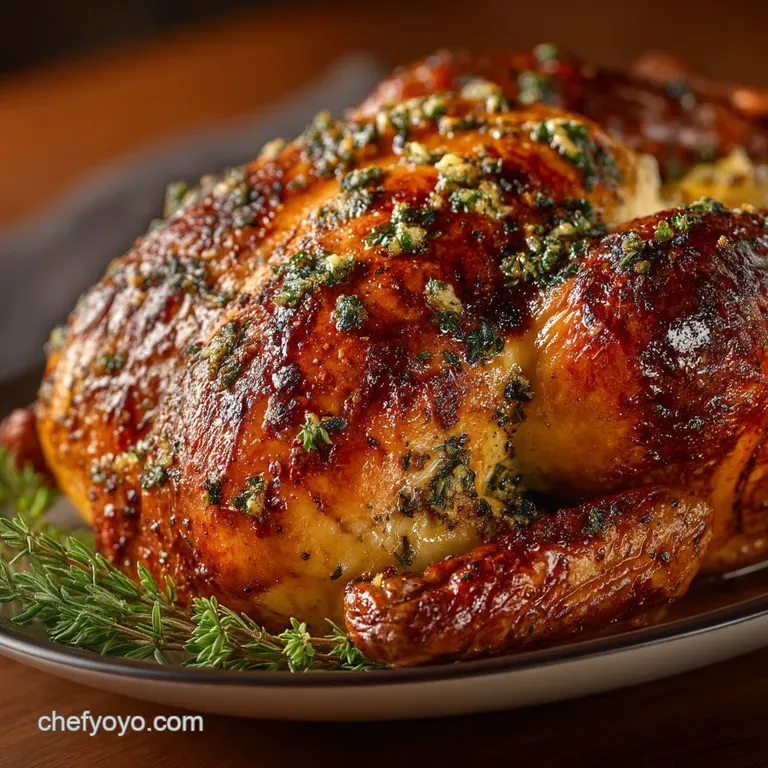
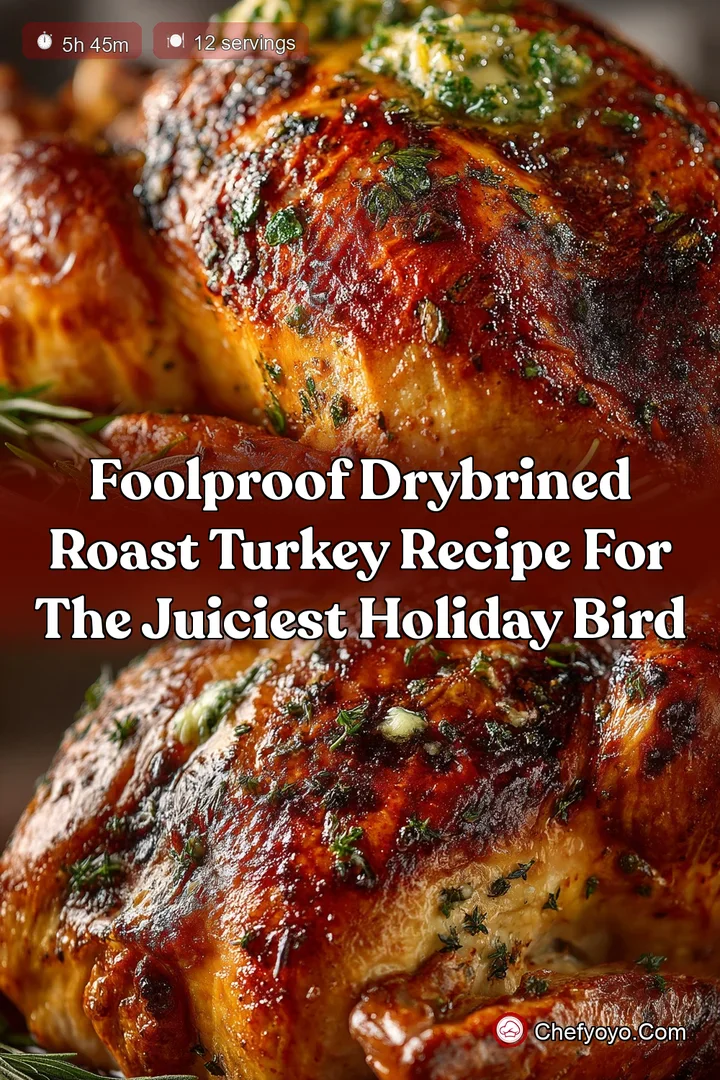
The Crown Jewel Perfectly Drybrined Roast Turkey with Sage Thyme Butter
- Elevating the Holiday Table: Why Dry Brining is Your Secret Weapon
- Ditching the Water Bath: Achieving Flawlessly Crispy Skin
- Essential Components for the Perfect Centerpiece
- Crafting the Aromatic Sage and Thyme Compound Butter
- Phase One: Preparing Your Turkey for the Dry Brine
- The Crucial Overnight Rest and Herb Butter Application
- Precision Roasting and Achieving the Ideal Internal Temperature
- Troubleshooting Common Roast Turkey Challenges
- Post-Feast Planning and Leftover Logistics
- Recipe FAQs
- 📝 Recipe Card
Elevating the Holiday Table: Why Dry Brining is Your Secret Weapon
The secret to preparing a truly unforgettable Roast Turkey —one that is profoundly juicy and flavorful from the exterior to the bone lies not in soaking it in a large container of highly seasoned water, but in utilizing the magic of the dry brine.
While traditional wet brining guarantees moisture, it often dilutes the bird’s natural poultry essence and prevents the skin from achieving maximum crispness. Our method sidesteps those issues completely, offering a simpler, less messy path to perfection.
By treating the turkey days in advance, we ensure the crucial flavouring and tenderizing process is handled long before the oven is even preheated, dramatically reducing stress on the big day while guaranteeing that every slice of your Best Roasted Turkey is seasoned throughout.
Ditching the Water Bath: Achieving Flawlessly Crispy Skin
For too long, the pursuit of a moist turkey often meant sacrificing that golden, shatteringly crisp skin. The dry-brining technique inherently solves this dilemma. By applying a salt rub and allowing the bird to rest exposed in the refrigerator, we actively draw moisture out of the surface of the skin, creating an ideal environment for the Maillard reaction when it hits the heat.
This is the cornerstone of a successful roast turkey recipe that focuses equally on texture and internal tenderness.
The Science of Juiciness: How Dry Brining Works Its Magic
The mechanism behind the dry brine is fascinatingly simple: osmosis. When kosher salt is applied to the surface of the raw poultry, it initially draws moisture out. This expelled moisture combines with the salt to form a concentrated, natural brine.
Over the subsequent 24 to 48 hours, the highly seasoned liquid is reabsorbed into the meat fibers. This process seasons the roast turkey breast deeply, tenderizes the protein structure, and locks in moisture more effectively than a wet brine, which primarily seasons the surface.
Crucially, the addition of a small amount of baking powder to the salt rub further raises the pH of the skin, accelerating the drying process and ensuring an unparalleled textural contrast to the succulent meat beneath.
Flavor Fundamentals: Building the Perfect Herb Butter Base
While the dry brine handles the internal seasoning, the surface requires a fatty, aromatic barrier to promote browning and infuse the outer layers of the meat. Our choice is a compound butter utilizing classic, earthy holiday flavours: freshly chopped sage, thyme, rosemary, and minced garlic, all combined with softened unsalted butter.
This aromatic blanket is applied directly under and over the skin, melting slowly during the cook time to baste the roast turkey breast from within, imparting profound herbal notes into the white meat where seasoning is often needed most.
Essential Gear for a Flawless Roast Turkey
Success relies heavily on temperature control, making certain tools mandatory. You will need a large roasting pan (high sides are helpful to catch drippings for gravy), a V-rack or wire rack to elevate the 5.5 kg (12 lb) turkey and allow hot air to circulate freely beneath it, and, most importantly, a reliable digital, instant read thermometer.
Relying on pop-up thermometers is a guaranteed way to overcook your bird; knowing the precise roast turkey internal temperature is the only way to achieve perfect results.
The Timeline Advantage: Stress Free Prep Days Ahead
One of the great logistical advantages of this roast turkey recipe is that the heavy lifting happens 1 to 2 days before the meal. The 45 minutes of active preparation (removing giblets, aggressively drying the bird, and applying the salt rub) is completed far in advance.
This advance preparation allows the bird to chill, the skin to dry, and the seasoning to penetrate fully, freeing up the immediate pre-dinner hours for side dishes and enjoying your guests.
Essential Components for the Perfect Centerpiece
Creating a magnificent centerpiece begins with sourcing the right ingredients and ensuring they are prepared correctly. We are aiming for a refined balance where the deep, savoury nature of the poultry is highlighted by classic, fragrant herbs and sufficient fat.
This method ensures every element contributes to the overall success, from the quality of the bird itself to the aromatics placed within the cavity.
Crafting the Aromatic Sage and Thyme Compound Butter
The herb butter is not merely a flavour enhancer; it’s an insurance policy against dryness and the primary source of the glorious crust. Using softened butter is key to its proper application, allowing it to coat the meat evenly both above and below the skin.
We combine one cup (225 g) of softened unsalted butter with generous amounts of fresh sage (2 Tbsp), fresh thyme (1 Tbsp), rosemary, garlic, and freshly ground black pepper to create a uniform, flavour packed paste.
Choosing the Right Bird: Size and Sourcing Tips
For holiday cooking, a 5.5 kg (12 lb) turkey is the ideal size, typically requiring about 3.5 to 4. 5 hours of roast turkey cooking time and comfortably serving 10 to 12 people. When sourcing, decide whether to use fresh or frozen.
If frozen, ensure it is fully thawed in the refrigerator (allow about 1 day of thawing time per 5 pounds of weight). Always verify that the neck and giblets have been removed from the two main cavities before beginning any preparation.
The Simple Salt Rub: Specific Measurements and Ratio
The dry brine is precise: 3 tablespoons (45 g) of kosher salt paired with 1 teaspoon (5 g) of baking powder (the latter being optional but highly recommended for crispness). It is critical to use kosher salt, which is coarser and less dense than table salt.
If substituting with fine table salt, you must halve the quantity to avoid over salting the meat.
Key Pantry Items and Optional Aromatics for the Cavity
While we never recommend packing the cavity with traditional stuffing (as this drastically increases the roast turkey cooking time and poses a food safety risk), filling it loosely with aromatics is essential for infusing moisture and fragrance.
Quartered yellow onion, roughly chopped carrots and celery, and a halved lemon placed inside the cavity provide steam and flavor. Plus,, 4 cups (950 ml) of low-sodium chicken or turkey stock should be kept on hand to prevent the pan drippings from scorching.
Temperature Matters: Using Softened vs. Melted Butter
When applying the herb mixture, the butter must be truly softened to room temperature, not melted. Softened butter has the necessary consistency to be worked seamlessly under the skin without tearing the delicate membrane.
Tearing the skin would compromise the final crust, allowing the precious juices and fat to escape prematurely.
Related Recipes Worth Trying
- The Best Herb and Citrus Turkey Brine for Moist Flavourful Meat — Our classic Herb and Citrus Turkey Brine recipe guarantees a beautifully moist flavourpacked holiday turkey Say goodbye to dry breast meat forever
- Chefs Secret How to Make Crispy Roasted Pumpkin Seeds Every Time — Stop making sad chewy seeds This definitive roasted pumpkin seeds recipe guarantees the ultimate crunchy snack Follow my nonnegotiable cleaning method for...
- Cracking Good oven-roasted Garlic Cabbage Steaks with Lemon Drizzle — Forget boiled cabbage These oven-roasted Garlic Cabbage Steaks caramelise into nutty perfection They are healthy easy and a brilliant Keto Cabbage Steaks...
Phase One: Preparing Your Turkey for the Dry Brine
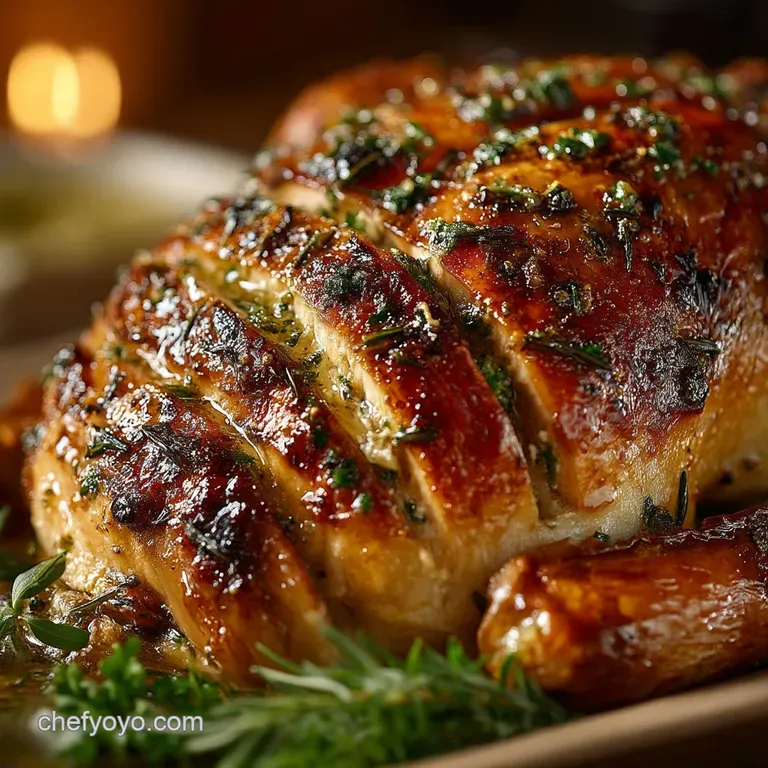
The initial preparation of the turkey is arguably the most crucial step for achieving that signature crisp skin. First, remove the bird from the packaging and immediately locate and remove the neck and giblets from both the main cavity and the neck cavity (these should be saved for making stock or gravy).
Second, and most vital, pat the entire bird inside and out— aggressively dry using paper towels. Moisture is the enemy of a crisp crust.
The Crucial Overnight Rest and Herb Butter Application
Once the salt and baking powder mixture is rubbed thoroughly over the bird, concentrating the application on the thickest parts of the breast and thighs, the turkey must be placed onto a wire rack set over a rimmed baking sheet.
It is then transferred to the refrigerator for an uncovered rest of 24 to 48 hours. This prolonged, uncovered chill allows the salt to work its deep seasoning magic while simultaneously air-drying the skin to a papery thin perfection.
On the day of the roast, the softened herb butter is applied, with two-thirds massaged gently under the skin, directly onto the meat, and the remaining one-third spread over the exterior surface before trussing.
Precision Roasting and Achieving the Ideal Internal Temperature
Achieving the Best Roasted Turkey relies entirely on monitoring the roast turkey temperature throughout the cooking process. Our method utilizes a high heat blast followed by a slow, gentle roast to maximize crispness while ensuring the white meat remains tender.
Thawing Safely and Preparing the Cavity
Assuming your turkey is fully thawed, it should be removed from the refrigerator 1 to 1. 5 hours before it is scheduled to go into the oven. This tempering period brings the meat closer to room temperature, promoting more even cooking.
After the butter application, place the aromatics (lemon, onion, herbs) into the main cavity, ensuring it is loosely filled.
Applying the Brine: Mastering the Salt Application Technique
When applying the salt mixture, focus on giving the breast and thighs the most attention. Use the palm of your hand to gently rub the mixture into the skin, making sure no major section is missed.
A light sprinkle inside the main cavity is sufficient, but the focus must remain on the surface meat where the brine can penetrate the protein structure.
Final Pre-Roast Turkey Preparations and Trussing
Before roasting, use butcher’s twine to secure the legs together tightly, and tuck the wing tips under the breast. Trussing ensures the bird holds a compact, attractive shape, allowing the air to circulate efficiently and ensuring uniform cooking of the joints.
Oven Dynamics: Setting the Temperature for the Initial Blast
Preheat your oven to a blistering hot 220°C (425°F). Place the turkey on the rack situated over the stock and chopped vegetables in the roasting pan. The turkey is roasted at this high roast turkey temperature for 30 minutes.
This intense heat sets the structure of the skin and creates a beautiful, deep golden colour instantly. After the initial blast, reduce the oven sharply to a moderate 165°C (325°F) for the remainder of the roast turkey cooking time (approximately 3 to 4 hours for a 12 lb bird).
Basting Myths Debunked: When and If You Should
Frequent basting is often counterproductive, requiring you to repeatedly open the oven door, dropping the internal temperature and extending the cooking time. Because the herb butter is situated directly under the skin, it is continually melting and moistening the meat naturally.
If you absolutely feel the need to baste to utilize the pan juices, limit it to once every hour, and do it quickly to maintain oven heat.
The Essential Rest: Guaranteeing a Juicier Final Roast Turkey
Once the instant read thermometer confirms the necessary roast turkey internal temperature —74°C (165°F) in the thickest part of the roast turkey breast and 82°C (180°F) in the thickest part of the thigh remove the bird immediately.
Transfer it to a cutting board and tent it loosely with foil. The turkey must rest for a minimum of 45 minutes, up to one full hour. This resting period is non-negotiable; it allows the muscle fibres to relax and reabsorb the juices, ensuring maximum tenderness and succulence when carving.
Troubleshooting Common Roast Turkey Challenges
A large poultry roast is always a feat of engineering, but being prepared for common issues ensures a flawless final presentation.
What to Do If the Skin Darkens Too Quickly
If, during the low-heat cooking phase, you notice the skin of the roast turkey breast is reaching your desired golden colour well before the internal temperature is met, simply create a loose tent using aluminum foil.
Drape the foil over the breast to shield it from direct heat, allowing the rest of the bird to finish cooking without burning the crust.
Ensuring the Thighs Cook Thoroughly and Safely
The dark meat of the thighs requires a higher internal temperature to break down connective tissues and reach optimal flavour and texture. If your breast hits 74°C (165°F) but your thighs are lagging, cover the breast with foil, and if your roasting pan allows, carefully tilt the pan slightly so that the thigh is closer to the hottest part of the oven.
If necessary, you can always remove the finished breast meat and return the remaining carcass and thighs to the oven for a final 15 minutes to reach the required 82°C (180°F).
Post Feast Planning and Leftover Logistics
The success of the holiday meal extends beyond the carving board into efficient post feast planning, minimizing waste and maximizing enjoyment.
Safe Storage: Refrigeration and Freezing Best Practices
For safe storage, all carved Roast Turkey meat must be refrigerated within two hours of being removed from the oven. Store leftovers in airtight containers, separating the meat from gravy or stuffing. Refrigerated turkey is best consumed within 3 to 4 days.
For longer storage, freeze the meat (sliced or shredded) in airtight freezer bags or containers for up to 3 months.
Nutritional Overview and Serving Size Calculations
This dry-brined roast turkey recipe produces approximately 10 to 12 servings from a 5.5 kg (12 lb) bird. Focusing on lean protein, a serving of breast meat (without skin or gravy) provides an average of 350-450 kcal, with a substantial 45-55 grams of protein, making it a nutritious and hearty centerpiece for any celebratory meal.
Recipe FAQs
Is the dry brine really worth the faff, or can I skip straight to roasting?
Absolutely, it's the game changer that separates a decent roast from a showstopper! Dry brining draws moisture from the skin while allowing the salt to season the meat deep within, essentially doing the job of a traditional brine without the inevitable mess.
Plus, that lengthy uncovered rest guarantees shatteringly crisp skin a true triumph for any holiday centerpiece.
I’m terrified of undercooked meat. What internal temperature should my Roast Turkey be inside?
Don't panic; a reliable digital thermometer is your best mate! The turkey is officially done when the thickest part of the breast reaches 74°C (165°F) and the thigh registers 82°C (180°F).
Crucially, once you pull the bird, allow it to rest for a non-negotiable 45 minutes to an hour; the internal temperature will continue to rise (carryover cooking) while the juices settle beautifully.
Help! My turkey skin is getting too dark before the meat is cooked. What should I do?
That's a classic panic moment, but easily sorted. If the breast is browning too quickly during the low-heat phase (325°F/165°C), simply create a little 'foil tent' or hat for the turkey.
Lay a loose piece of aluminium foil over the dark areas to shield them from the oven’s heat while allowing the rest of the bird, especially the slower cooking legs, to catch up.
I usually stuff my turkey. Why does this recipe advise against putting stuffing in the bird?
While tempting for flavour, stuffing the cavity drastically lengthens the cooking time and poses a food safety risk. The stuffing inside the bird must reach the safe temperature of 74°C (165°F), but by the time it gets there, the delicate breast meat is often wildly overcooked and dry.
It's best to cook your flavourful sage and onion stuffing separately like a good Brit cooks their Yorkshire puddings on the side!
I’ll have so much leftover Roast Turkey. How long does it keep, and can I freeze it?
Leftovers are half the fun and essential for Boxing Day sandwiches! Properly refrigerated, carved turkey should be stored in an airtight container and safely consumed within 3 to 4 days.
If you have masses of meat left over, freeze it promptly; shred or dice it first, place it in freezer bags, and it will keep brilliantly for up to three months for quick stews, pies, or curries.
Dry Brined Roast Turkey With Herb Butter
Ingredients:
Instructions:
Nutrition Facts:
| Calories | 513 kcal |
|---|---|
| Protein | 6.4 g |
| Fat | 14.6 g |
| Carbs | 32.2 g |
| Fiber | 13.1 g |
| Sodium | 3496 mg |
