Overnight French Toast Casserole with Praline
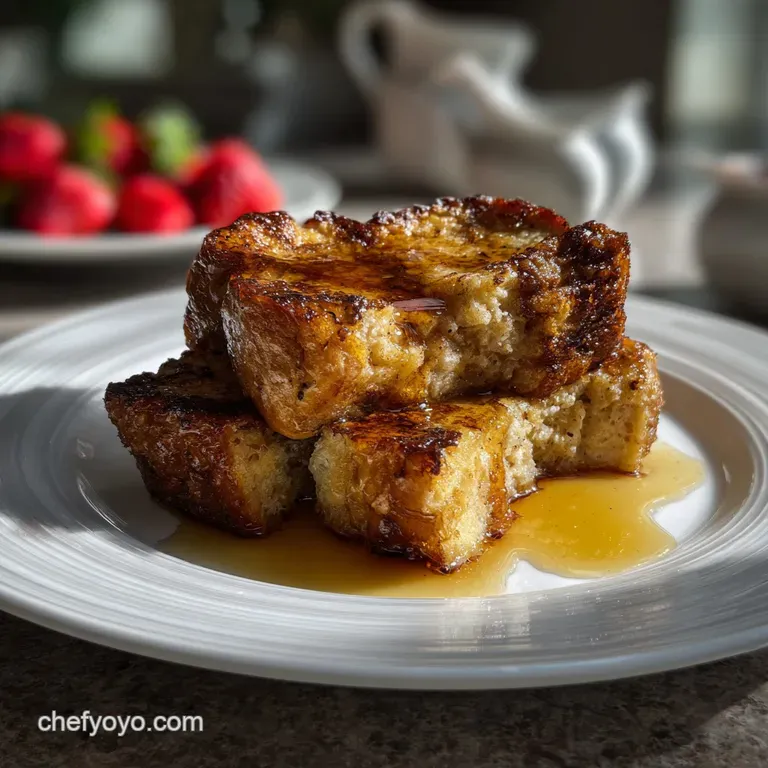
- Effort/Time: 20 minutes prep / 8 hours rest / 55 minutes bake
- Flavor Hook: Fusion of buttery French pastry and southern-style pecan praline crunch.
- Perfect for: Stress-free holiday hosting and make-ahead brunches featuring this amazing overnight french toast casserole.
- The Molecular Science of Why This Recipe Succeeds
- Technical Precision: Time, Temp, and Weight Checkpoints
- The Molecular Architecture of Brioche and Custard
- Specialized Gear for Superior Thermal Conductivity
- The Sequential Assembly Protocol for Maximum Hydration
- The Physics of Failure: Navigating Texture Pitfalls
- Contemporary Flavor Profiles and Ingredient Swaps
- ⚗️ The Scaling Lab: The Physics of Quantity
- Long-Term Texture Management and Cold Storage
- Creative Presentation Styles and Sensory Finishing
- Recipe FAQs
- 📝 Recipe Card
Engineering the Perfect Morning with Overnight French Toast Casserole
There is nothing more gut-wrenching than waking up to a house full of hungry guests, pulling a "breakfast bake" out of the oven, and realizing it has the consistency of soggy, gray cardboard.
I’ve seen it happen: a $40 grocery haul of premium brioche and heavy cream wasted because the bread wasn't properly desiccated or the custard was rushed. The emotional toll of a failed brunch is real nobody wants to start their day chewing through a dense, eggy sponge that lacks any structural integrity.
Mastering this overnight french toast casserole requires patience.
I’ll be the first to admit I’ve ruined a dozen batches of this overnight french toast casserole. In my early days, I used fresh, soft bread straight from the bakery and skipped the overnight rest, thinking I could "hack" the hydration process.
What I got was a liquid mess at the bottom and dry crusts on top. It took me years of iterating to realize that the physics of bread porosity and protein coagulation cannot be cheated; you have to work with the ingredients, not against them.
The secret to a velvet centered, mahogany topped bake lies in the starch gelatinization process. By allowing the brioche to sit in a rich custard for 8 hours, the starch granules in the bread swell and trap the moisture, creating a unified structure rather than a leaky mess.
When you finally hit it with that over high heat praline topping, the Maillard reaction creates a shattering crunch that contrasts the creamy interior. This isn't just breakfast; it’s a contemporary study in texture and aroma that makes this overnight french toast casserole legendary.
The Molecular Science of Why This Recipe Succeeds
- Starch Retrogradation: Stale bread has a crystallized starch structure that creates "pockets" for the custard to fill without the bread disintegrating into mush.
- Protein Denaturation: The gentle heat of the oven causes the egg proteins to uncoil and bond, trapping the milk and cream in a stable, gel-like matrix.
- Maillard Reaction: The combination of brown sugar and pecans on the surface undergoes a chemical reaction that creates complex, nutty flavor compounds.
- Lipid Emulsification: Using heavy cream and whole milk provides enough fat to keep the custard velvety, preventing the "rubbery" texture often found in lower fat bakes.
Technical Precision: Time, Temp, and Weight Checkpoints
To achieve a Masterclass level overnight french toast casserole, you must adhere to these exact numeric checkpoints. Guesswork leads to inconsistency.
- 454 grams (1 lb): The exact weight of brioche needed to absorb the 3 cups of total liquid.
- 175°C (350°F): The critical temperature for baking that ensures the custard sets before the sugar topping burns.
- 71°C (160°F): The target internal temperature for the center of the casserole to ensure food safety and a non-liquid center.
| Feature | Fast Method (30 min soak) | Classic Overnight Method |
|---|---|---|
| Texture | Inconsistent; dry centers, soggy bottom | Homogeneous, velvety crumb throughout |
| Flavor Depth | Surface level sweetness | Deeply infused vanilla and nutmeg notes |
| Ease | High stress morning prep | Zero effort morning; bake and serve |
The Molecular Architecture of Brioche and Custard
The quality of your overnight french toast casserole is tethered to the quality of your elements. We are looking for high fat, high protein components to create a fusion of comfort and contemporary luxury.
Ingredient Chemistry Breakdown
| Ingredient | Chemical/Physical Role (Science) | The Pro Secret (Why This Matters) |
|---|---|---|
| Large Eggs (8) | Protein network formation | Creates the structural "lift" and prevents the bread from collapsing. |
| Heavy Cream (1 cup) | Lipid based mouthfeel | Fat molecules coat the tongue, slowing the perception of sugar for a balanced flavor. |
| Brioche (1 lb) | High egg-content starch base | The high fat content in brioche keeps the crumb tender even after a long bake. |
| Kosher Salt (0.5 tsp) | Osmotic balance | Enhances the volatility of the vanilla and nutmeg aromatics. |
- 1 lb Brioche loaf
- Cut into 1 inch cubes. Why this? Higher egg/butter ratio than white bread ensures it doesn't dissolve.
- 8 Large Eggs
- Use room temperature eggs for better emulsification.
- 2 cups Whole Milk
- Provides the necessary hydration for the starch.
- 1 cup Heavy Cream
- Adds the "velvety" finish.
- 3/4 cup Granulated Sugar
- Provides the primary sweetness for the custard.
- 1/2 cup Unsalted Butter
- Cold and cubed for the crumble.
- 1/2 cup Light Brown Sugar
- Packed for the praline topping.
- 1/2 cup All-Purpose Flour
- Provides the structure for the crunch.
- 1 cup Chopped Pecans
- For the "shattering" texture.
Chef's Tip: For a creative twist, grate your cold butter directly into the flour and sugar mixture using a box grater. This keeps the fat cold, ensuring the topping stays crumbly and doesn't melt into a greasy puddle on top of your overnight french toast casserole.
Specialized Gear for Superior Thermal Conductivity
Using the right tools prevents hot spots and ensures your french toast casserole cooks evenly from the edges to the center.
- Le Creuset 9x13 Stoneware Dish: Stoneware provides even heat retention, which is vital for egg-based custards.
- Pyrex Glass Mixing Bowls: Essential for whisking your custard without any metallic reactive aftertaste.
- OXO Good Grips Balloon Whisk: High wire count allows for faster aeration and emulsification of eggs and cream.
- KitchenAid Hand Mixer: Use this if you want an ultra aerated, "soufflé style" custard.
The Sequential Assembly Protocol for Maximum Hydration
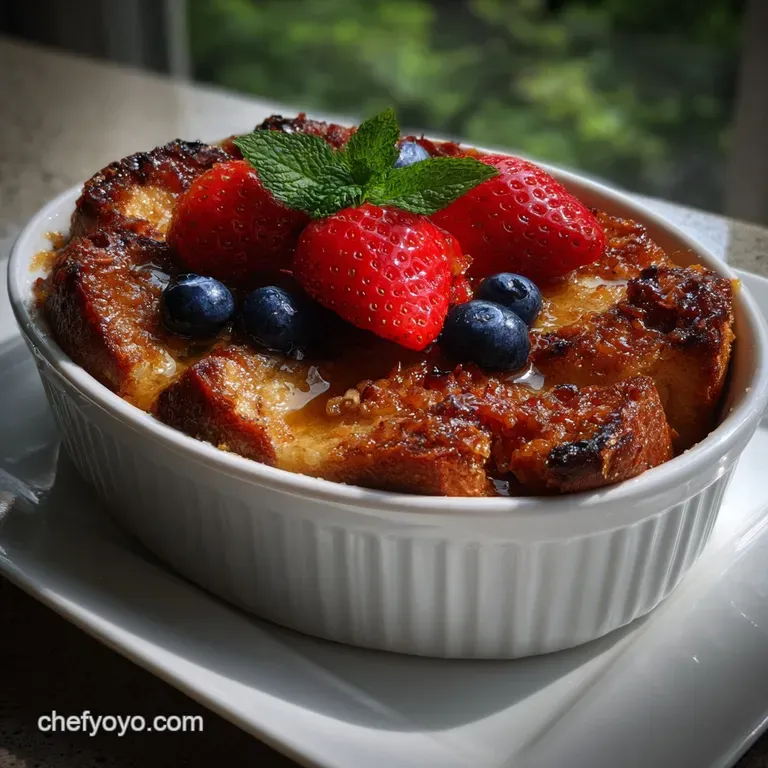
Follow these steps exactly to ensure your toast casserole achieves the perfect texture. If you skip step 7, you've made baked French Toast, not the superior overnight french toast casserole.
- Cube the 1 lb brioche into 2.5 cm pieces. Note: Larger cubes prevent the bread from turning into a uniform mush.
- Distribute cubes into a buttered Le Creuset dish until evenly layered with no deep gaps.
- Whisk 8 eggs and 3/4 cup granulated sugar in a large bowl until pale yellow and slightly frothy.
- Incorporate 2 cups whole milk, 1 cup heavy cream, 2 tbsp vanilla, and spices until the aroma of vanilla dominates the room.
- Pour the custard over the bread cubes until every piece is visibly saturated and glistening.
- Press the bread down gently with a spatula until the liquid rises slightly above the cubes.
- Cover with foil and refrigerate for 8 hours or overnight. Note: This is the "Overnight Rest" that allows for complete hydration.
- Combine 1/2 cup flour, 1/2 cup brown sugar, 1 cup pecans, and cold butter until it resembles coarse, wet sand.
- Sprinkle the topping over the cold casserole until the bread is completely obscured by the praline layer.
- Bake at 350°F (175°C) for 55 minutes until the center jiggles slightly but the top is a deep, mahogany brown and the smell of toasted nuts fills the kitchen.
The Physics of Failure: Navigating Texture Pitfalls
Why Your Casserole is Soggy in the Middle
This usually happens because of poor heat penetration. If the dish is too deep, the outside overcooks before the center sets. It can also be caused by using "fresh" bread that hasn't had time to dry out, leading to a surplus of moisture.
This is a common pitfall when rushing the overnight french toast casserole process.
| Problem | Root Cause | The Fix | Pro Protocol |
|---|---|---|---|
| Liquid at bottom | Incomplete egg coagulation | Bake 5 10 mins longer | Use a digital thermometer to hit 160°F. |
| Soggy Bread | Insufficient staling | Toast cubes in oven at 200°F | 15 mins at low heat removes internal moisture. |
| Burnt Topping | Sugar caramelization too fast | Tent with aluminum foil | Check at 40 mins; cover if mahogany reached. |
Why Your Bread is Dry on Top
If the top layer of your overnight french toast is crunchy but bone dry, it means the cubes weren't submerged properly during the soak.
Quick Fix Table
| Problem | Cause | Fix |
|---|---|---|
| Dry Top | Evaporation during soak | Flip cubes halfway through the resting period. |
| Rubbery Egg | Overcooking | Pull from oven when the center still has a slight "jiggle." |
| Grainy Topping | Butter was too warm | Use frozen butter and a pastry cutter for the crumble. |
Contemporary Flavor Profiles and Ingredient Swaps
If you want to experiment with a fusion approach, consider these creative variations. This make-ahead french toast casserole is a blank canvas for authentic global flavors.
| Original Ingredient | Substitute | Why It Works |
|---|---|---|
| Whole Milk | Coconut Milk (Full fat) | Adds a nutty, tropical note; same fat content for creaminess. Note: Will change flavor profile significantly. |
| Pecans | Toasted Macadamia Nuts | Provides a more buttery, contemporary crunch. |
| Vanilla Extract | Miso Paste (1 tsp) | Adds an "umami" depth that balances the sugar. Note: Dissolve in milk first. |
| Brioche | Challah | Similar egg content but slightly denser structure for a sturdier bake. |
Decision Shortcut: If you want a classic Southern profile, use the pecans and extra nutmeg in your overnight french toast casserole. If you want a contemporary fusion profile, swap vanilla for 1 tsp of Pandan extract and use coconut milk.
If you want an ultra rich texture, swap the whole milk for more heavy cream.
⚗️ The Scaling Lab: The Physics of Quantity
When you need to feed 20 people instead of 9, the thermodynamics of your overnight breakfast casserole change.
- Flavor Saturation: If doubling the recipe, scale the cinnamon and nutmeg to 1.5x, not 2x. Spices can become overpowering and "dusty" in large volumes.
- The Square Cube Law: A double batch in a deeper pan has less surface area relative to its volume. The center will take significantly longer to cook while the edges risk burning.
- Thermal Mass: A cold, double sized casserole will drop your oven temp by 30 40 degrees instantly. The Fix: Preheat your oven to 375°F, then drop it back to 350°F once the dish is inside.
- Pan Crowding: Do not stack two pans on one rack. This blocks airflow. Rotate the pans between top and bottom racks halfway through the bake.
Long Term Texture Management and Cold Storage
Your brioche french toast bake overnight is best fresh, but it can be managed for zero waste leftovers. This storage advice applies equally well to any overnight french toast casserole batch.
- Fridge: Store in an airtight Container for up to 4 days. The texture will become denser as the starches continue to set.
- Freeze: Slice into individual portions, wrap tightly in plastic, and freeze for up to 2 months. Science: Rapid freezing prevents large ice crystals from shredding the custard matrix.
- Reheating: Avoid the microwave it turns the praline topping into a sticky syrup. Use an air fryer at 325°F for 5 minutes to restore the "shatter" to the crust.
💡 ZERO WASTE PHILOSOPHY: Don't discard the brioche crusts if you trimmed the bread. Transform: Dry them out and pulse in a blender for "sweet breadcrumbs." Science: These are high in fat and sugar, making them the perfect topping for a Tater Tot Casserole recipe or even a fruit crumble.
Creative Presentation Styles and Sensory Finishing
When you pull this overnight french toast casserole with cream cheese or praline from the oven, let it rest for 10 minutes. This allows the internal steam to redistribute, preventing a "caved-in" appearance.
Getting the finishing touches right elevates the entire overnight french toast casserole experience.
- 1. The Prep
- The sharp, alcoholic bite of vanilla mixing with the earthy musk of freshly grated nutmeg.
- 2. The Mid-Bake
- A warm, bready aroma that signals the starch gelatinization is complete.
- 3. The Finish
- The scent of scorched sugar and toasted oils from the pecans this is your cue to pull it out.
Flavor Architecture: To give this a truly contemporary edge, serve it with a dollop of crème fraîche instead of maple syrup. The acidity of the cultured cream cuts through the 638 kcal of richness, providing a balanced, authentic breakfast experience. For a side that balances the sweetness, consider pairing it with a savory Green Bean Casserole recipe if you're serving this as part of a larger holiday spread.
Common Myths:Myth: You must use stale bread. Truth: While stale bread is easier, you can achieve the same results by oven drying fresh brioche at low heat. The goal is moisture removal, not "age." Myth: More eggs make it better.
Truth: Too many eggs will result in a "sulfuric" smell and a rubbery, omelet like texture. Balance is key for the perfect overnight french toast casserole.
This overnight french toast casserole is more than just a recipe; it’s a systematic approach to texture and flavor. By understanding the chemistry of the soak and the physics of the bake, you ensure that every slice is a velvety, shattering success.
Let's crack on and get that brioche cubing your future self will thank you tomorrow morning.

Recipe FAQs
What is the absolute minimum soaking time required?
3 hours, minimum for structure, but 8+ hours is ideal. Soaking for only 30 minutes results in surface moisture saturation without deep internal starch absorption. This kinetic failure leads to uneven final texture.
Can I substitute the brioche with regular white bread?
No. White bread lacks the fat structure to support the custard. Regular bread absorbs too much liquid, dissolving into mush during the long overnight rest period. Brioche’s high butter/egg content provides necessary structural lipids.
Why is the topping burning before the center is set?
Oven temperature is too high for the custard's thermal mass. The sugar mixture caramelizes rapidly on the surface (Maillard reaction), while the interior thermal mass lags, causing premature crust scorching.
- Bake at 350°F maximum
- Tent the dish with foil at 40 minutes
- Use a thermometer to confirm 160°F internal center
Should I use salted or unsalted butter for the praline topping?
Unsalted butter for precision control. Salted brands vary widely in sodium content (sometimes up to 200mg per tablespoon), disrupting the necessary balance against the brown sugar in the topping. Unsalted allows precise salt modulation via the measured Kosher salt in the custard.
Myth: Using fresh, soft brioche works just as well if I soak it longer.
Myth: You must use stale bread. Reality: Fresh bread's soft, un-retrograded starch structure readily dissolves when saturated, resulting in soupiness rather than structured absorption.
Is it possible to prepare this using an air fryer?
Only in small, shallow batches due to airflow dynamics. Air fryers create intensely dry, rapid heat flow which cooks the surface far faster than the custard below, compromising uniformity. If you master the high convection environment here, see how the same heat transfer principles apply when mastering the delicate custard set required for our Foolproof Classic French Vanilla Crème Brûlée Recipe.
Myth: I can skip the milk and just use heavy cream for a richer texture.
Myth: Only using heavy cream increases richness. Reality: Excessive fat content inhibits proper protein bonding during baking, leading to a greasy mouthfeel instead of a stable, velvety custard gel.
Overnight French Toast Casserole 2
Ingredients:
Instructions:
Nutrition Facts:
| Calories | 638 kcal |
|---|---|
| Protein | 14.4 g |
| Fat | 39.8 g |
| Carbs | 59.6 g |
| Fiber | 1.4 g |
| Sugar | 30.4 g |
| Sodium | 378 mg |
