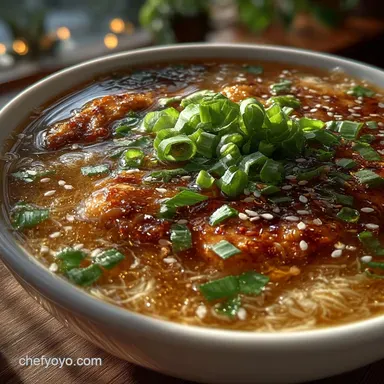
The Silken Stream Quick Classic Egg Drop Soup
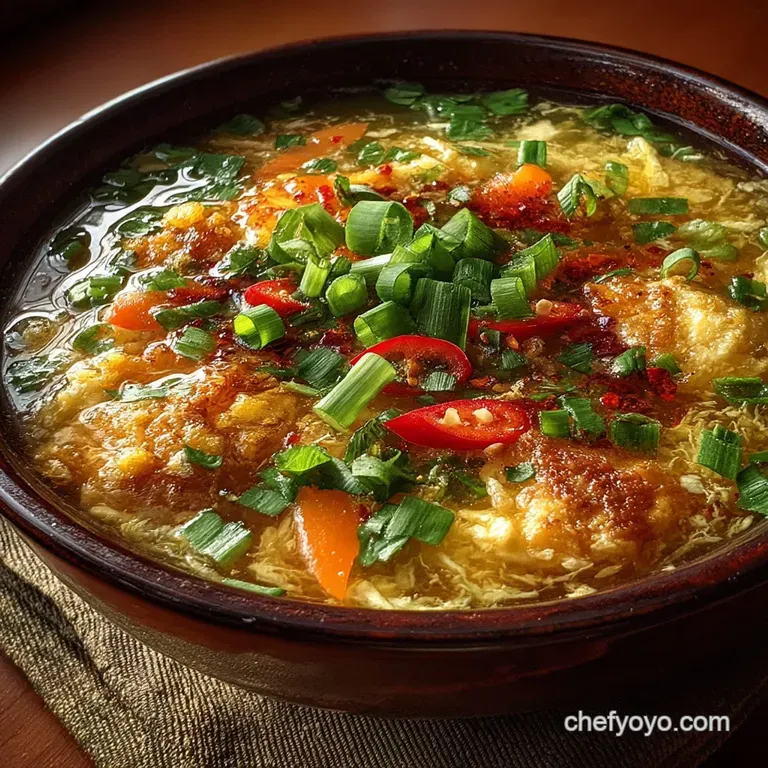
- The Magic Behind the Perfect Silken Swirls
- Why This Recipe Triumph Over Takeout Egg Drop Soup
- Assembling Your Pantry for Authentic Flavour
- Essential Tools for the Aspiring Soup Maker
- The Step-by-Step Guide to Seamless Soup Creation
- Mastering the Art of the Delicate Egg Drop
- Elevating Your Bowl: Variations and Upgrades
- Storage Wisdom for Your Leftover Egg Drop Soup
- Recipe FAQs
- 📝 Recipe Card
The Magic Behind the Perfect Silken Swirls
Few dishes deliver the immediate satisfaction of a piping hot bowl of Egg Drop Soup . It’s the quintessential starter in any authentic Chinese restaurant, yet it remains one of the simplest and quickest dishes you can master in your own kitchen.
When we talk about this iconic Chinese Egg Soup , we are talking about texture: those ethereal, delicate ribbons of cooked egg suspended gracefully in a steaming, savoury liquid. Achieving this signature swirl isn't about complex culinary feats; it's about precision in timing and execution.
We are elevating this humble soup from a watery afterthought to a truly masterful Comfort Food Soup .
Why This Recipe Triumph Over Takeout Egg Drop Soup
Why bother making Easy Egg Drop Soup at home when you can order it? Because homemade soup always wins. Home cooks have control over the quality of the broth, the freshness of the ginger, and crucially, the ratio of thickener to liquid.
Store-bought versions often rely too heavily on heavy-handed cornstarch applications, resulting in a gluey texture rather than the desired silken cloud effect. Our goal here is to capture the essence of a truly great Savory Chicken Soup base, enhanced by the simplicity of the egg drop technique, delivering superior flavour in under 25 minutes total time.
Understanding the Comfort Food Pedigree
This dish embodies what we crave on a chilly evening, something warm, easy to digest, and deeply comforting. The history of Egg Drop Soup Recipe is rooted in resourceful, peasant cooking, utilizing simple pantry staples to create maximum flavour payoff.
It’s the ultimate cozy companion, proving that elegance doesn't require complication. It’s the antithesis of fussy cooking; it's pure, accessible warmth.
Achieving the 'Cloud' Texture: Our Secret Weapon
The cloud-like texture hinges entirely on how the egg is introduced. We are aiming for long, continuous strands, not small clumps. This effect requires two key elements: a rapidly swirling broth and a very thin drizzle of the beaten egg.
We’ll use a fork to ensure the egg enters the liquid as fine threads rather than a solid stream. This careful introduction ensures the egg cooks instantly upon hitting the simmering liquid, creating those beautiful, suspended ribbons we associate with great Egg Drop Soup .
A Speedy Solution for Weeknights Cravings
With prep taking about ten minutes and the cooking time clocking in at just twelve minutes, this recipe is a genuine weeknight champion. It’s light enough not to weigh you down after a long day but satisfying enough to feel like a complete, nourishing meal.
If you’re seeking a genuinely fast, feel-good dish, look no further than this blueprint for perfect Egg Drop Soup .
Assembling Your Pantry for Authentic Flavour
To create the most authentic and flavourful Egg Drop Soup Ingredients are minimal, which means quality matters. We begin with a high-quality chicken broth, six cups is the magic number here.
While you can use salted stock, opting for low-sodium gives you precise control over the final seasoning. Fresh ginger is non-negotiable; grate or thinly slice a one-inch piece to infuse the broth deeply during the initial simmer.
For that characteristic subtle heat and aroma, skip black pepper; the preferred seasoning here is white pepper (about a quarter teaspoon). Finally, a touch of toasted sesame oil at the very end marries all the flavours perfectly, while thinly sliced fresh scallions provide a necessary pop of colour and freshness upon serving.
Essential Tools for the Aspiring Soup Maker
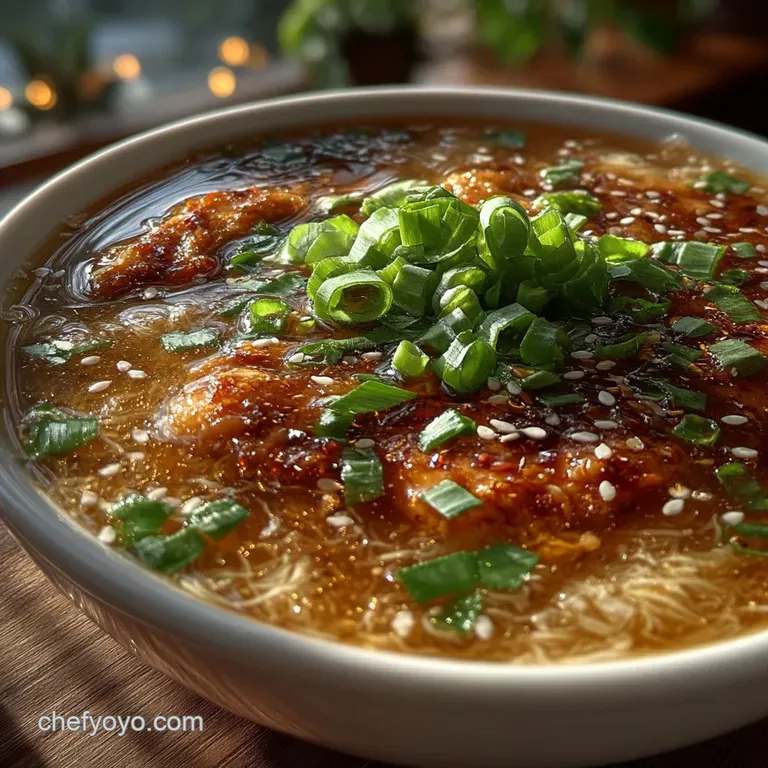
Fortunately, you don’t need specialized equipment to produce restaurant-quality Egg Drop Soup . A medium saucepan or a smaller Dutch oven is perfect for handling the 1.4 litres of liquid.
The most important tools involve handling the egg: you will need a small bowl for your lightly beaten eggs and a whisk for preparing the slurry. Crucially, when it comes time to drop the egg, use chopsticks or a fork, not a ladle or a spoon, to achieve the thin, rapid drizzle needed for silken threads.
The Broth Base: Beyond Just Water and Salt
While water and salt technically could form a base, the resulting Egg Drop Soup would be weak and flat. The foundation here must be a rich, savoury stock.
A good Savory Chicken Soup base provides the deep umami backbone necessary to support the delicate egg. Simmering the broth with the fresh ginger for at least five minutes ensures the flavour permeates the liquid before we thicken it.
Some cooks prefer adding a splash of light soy sauce here, but we reserve seasoning until the very end to maintain the clarity of the broth.
Selecting Your Egg Quality for Optimal Strands
For four servings, three large eggs work perfectly. They must be lightly beaten, we are looking to combine the yolk and white just until homogenous, without incorporating too much air. Over-beating can lead to a foamy texture on the surface, which detracts from the intended smooth ribbons.
Remember, these eggs are cooked rapidly, so their fresh quality will shine through.
Thickening Agents: Cornstarch vs. Potato Starch Precision
The key to achieving the light, slightly viscous texture that characterizes this soup involves a starch slurry. Most authentic recipes lean on cornstarch, which yields a very clear, glossy finish when properly cooked.
Potato starch is a fantastic alternative, especially if you are aiming for a recipe that works well even if you are considering how to make Egg Drop Soup Without Cornstarch .
Regardless of your choice, the ratio is critical: two tablespoons of starch mixed with three tablespoons of cold water to form a smooth slurry. Never add the dry starch directly to hot liquid!
Related Recipes Worth Trying
- The Ultimate Caramelised French Onion Soup Recipe Bistro Style — Master the Best French Onion Soup at home This rich recipe guarantees deeply savoury broth and perfectly melted Gruyère Get the foolproof steps now
- The Best Easy Taco Soup Recipe with Ground Beef Comfort Food — Need a speedy weeknight hug in a bowl This Easy Taco Soup Recipe uses ground beef and simple ingredients for a vibrant flavourful TexMex dinner ready in...
- The Gold Standard Decadent Yet Light Broccoli Cheddar Soup — This is the ultimate Broccoli Cheddar Soup recipecreamy comforting and surprisingly lightened up Learn the secret to smooth lumpfree cheese sauce
The step-by-step Guide to Seamless Soup Creation
The journey to perfect soup moves from infusion to thickening, culminating in the dramatic egg drop. First, we infuse the broth with ginger, bringing it to a gentle simmer before removing the solids to ensure a clean final presentation. Next comes the thickening.
While constantly stirring the simmering broth with a whisk, slowly introduce the cold starch slurry. Watch as the liquid clarifies and gains body. Once it coats the back of a spoon lightly and maintains a gentle simmer (not a rolling boil!), it is ready for the main event. Season with white pepper and salt sparingly.
Mastering the Art of the Delicate Egg Drop
This is the moment that separates the novices from the soup masters. Everything depends on movement and control.
Building the Savoury Foundation: Simmering the Aromatics
The initial phase involves bringing your 6 cups of chicken broth and the ginger to a point just below boiling, a gentle, steady simmer. Allow this to infuse for about five minutes. If you want a truly clear broth, strain out the ginger pieces at this stage before proceeding to thicken.
A clear broth highlights the beautiful egg ribbons better than a murky one.
Achieving Peak Broth Viscosity: When to Thicken
Once the ginger has done its job, whisk in your prepared cornstarch slurry, pouring it in a slow, steady stream while continuously stirring the pot. You must stir for about 45 to 60 seconds until the broth transforms from watery to slightly syrupy. It should look clear, not cloudy.
If it doesn't thicken immediately, keep simmering gently for another 30 seconds. At this point, season lightly with salt and white pepper.
The Crucial Technique: Pouring the Eggs Without Clumping
With the broth gently simmering, take your lightly beaten eggs. Begin stirring the soup rapidly in a consistent circular motion, this creates a vortex. While the liquid is swirling, slowly drizzle the egg from a fork or chopsticks held high above the surface, allowing the thin streams to fall directly into the moving centre of the vortex.
The rapid movement ensures the egg cooks into long, separated threads rather than clumping into one mass. Pour steadily until all the egg is used.
Final Touches and Instant Serving Protocol
Once the egg is incorporated, immediately stop stirring. Let the soup sit undisturbed for about 30 seconds to allow the egg strands to fully set into their final, silky form. Turn off the heat completely. Drizzle in the toasted sesame oil for aroma and stir once gently.
This soup must be served immediately, it loses its textural integrity rapidly as it cools. Ladle into warm bowls and garnish lavishly with fresh scallions.
Elevating Your Bowl: Variations and Upgrades
While the beauty of this Egg Drop Soup Recipe lies in its simplicity, it is wonderfully adaptable. It shines as a clean base for further additions, transforming from a light starter into a more robust side dish or even a light lunch.
Protein Additions: Making it an Inexpensive Crowd Pleaser
To add substance, incorporate cooked proteins during the simmering stage. Shredded leftover roast chicken is the easiest addition, but finely diced cubes of firm tofu are also excellent. If using raw meat like finely minced pork, introduce it with the broth so it cooks through completely before the egg drop stage.
Flavour Boosters: Herbs, Heat, and Umami Enhancers
For an extra layer of umami, a teaspoon of mushroom powder can be added with the broth. If you prefer a spicy kick, a dash of white pepper isn't enough; stir in a teaspoon of chili garlic sauce or a few drops of chili oil right before serving.
Some regional variations also call for a splash of rice wine vinegar added at the very end for brightness, especially if you are craving a slightly different profile than the standard comfort Egg Drop Soup Nutrition profile offers.
Storage Wisdom for Your Leftover Egg Drop Soup
While best enjoyed moments after creation, sometimes leftovers happen. Because the texture relies heavily on the balance between the liquid and the starch, reheating can be tricky.
Can This Be Frozen? A Practical Guide
Generally, soups thickened with starch do not freeze well. The freezing and thawing process often causes the starch molecules to break down, resulting in a watery soup with separated solids. If you must store it, keep it refrigerated in an airtight container for up to three days.
When reheating on the stove, do so slowly over low heat, stirring constantly. If it seems too thin, you will need to re-slurry a very small amount of cornstarch in cold water and whisk it in gently while reheating to restore the desired viscosity.
Nutritional Snapshot: Light Yet Satisfying
One of the major draws of this recipe is its favourable Egg Drop Soup Nutrition profile. It is inherently low in fat and calories, mainly providing high-quality protein from the eggs and stock.
It serves as an excellent conduit for hydration and warmth without contributing excessive calories, making it ideal for those tracking intake while still desiring a deeply satisfying experience. Enjoy this simple, perfect bowl!
Recipe FAQs
How do I get those long, silky ribbons in my Egg Drop Soup instead of scrambled bits?
It’s all about technique, mate! You need two things: ensure your broth is at a gentle simmer (not a rolling boil), and crucially, stir the broth rapidly in one direction to create a vortex just before you drizzle in the egg. This movement catches the egg and stretches it into those lovely, cloud-like ribbons.
Can I make this Egg Drop Soup ahead of time, or does it need to be eaten fresh?
Ideally, it should be eaten straight away; the texture of the egg is at its absolute best when fresh. If you must store leftovers, keep them refrigerated for up to two days, but be warned: the egg ribbons can sometimes soften or break down slightly upon reheating.
What is the secret to making sure the cornstarch slurry thickens the soup properly without lumps?
The secret is temperature, much like making a proper gravy! You must mix your cornstarch with absolutely cold water before adding it to the hot broth. Pour the slurry in slowly while constantly whisking the simmering liquid; this prevents the starch from seizing up into unfortunate, uncooked lumps.
I don't have chicken broth; what's the best substitute for an authentic Egg Drop Soup flavour?
If chicken broth isn't an option, good quality vegetable broth will work in a pinch, though the flavour will be much lighter. For extra depth, consider simmering your vegetable broth with a few dried shiitake mushrooms first, or adding a dash of white miso paste (ensure it dissolves fully before thickening).
Can I add other things to the soup, like tofu or vegetables, without ruining the delicate balance?
Absolutely! This soup is a brilliant blank canvas for additions. Soft silken tofu or finely shredded cooked carrots/mushrooms should be added at the beginning when you simmer the stock so they warm through properly. Just ensure you don't overload it; we want the egg to shine through!
Why does the recipe specify white pepper instead of black pepper?
White pepper is essential for that classic, authentic taste often found in traditional Chinese restaurants. It offers a distinctive earthiness without the harsh, sharp bite that black pepper would bring, and it keeps the soup’s visual appearance clean and pale, rather than speckled!
Foolproof Egg Drop Soup Recipe Silken Ribbons in 22 Minutes