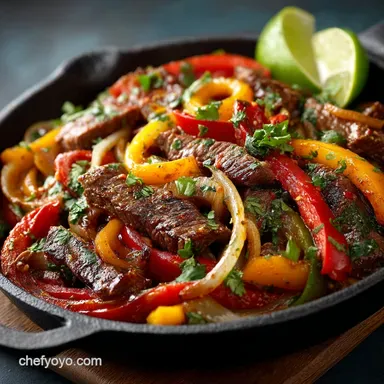
Sizzling Skillet Steak Fajitas the Authentic Way

- Unlocking the Secret to Sizzling, Restaurant-Quality Steak Fajitas
- Why This Approach Guarantees the Best Fajita Night Ever
- Curating the Core Components for Superior Flavor Profiles
- The Spice Blend Blueprint: Building Deep, Smoky Notes
- Mastering the Marinade: Infusion Time and Technique
- Achieving High-Heat Perfection: Searing the Steak Fajitas
- Serving Suggestions: Toppings That Transform the Experience
- Maximizing Your Leftovers: Make-Ahead and Storage Strategies
- Recipe FAQs
- 📝 Recipe Card
Unlocking the Secret to Sizzling, Restaurant-Quality Steak Fajitas
There are few culinary experiences as satisfying as those first moments when a platter of piping hot Steak Fajitas hits the table, the hiss of the skillet, the aroma of toasted spices, and the promise of fresh, vibrant ingredients.
Forget those overly saucy, lukewarm versions you might have encountered elsewhere; we are dedicating this session to mastering the true, high-heat, smoky char that defines authentic Tex-Mex perfection. Our goal isn't just to make dinner; it's to replicate that specific, exhilarating sizzle you expect when dining out.
This Beef Fajita Recipe emphasizes technique as much as seasoning, ensuring that every strip of beef is tender, flavourful, and perfectly seared.
Why This Approach Guarantees the Best Fajita Night Ever
What separates a good fajita from a legendary one? It boils down to three fundamental steps: proper ingredient selection, patient marination, and aggressive heat application. This comprehensive guide walks you through creating this spectacular meal, covering everything from selecting the right cut of meat to the crucial resting time before slicing.
Following this blueprint ensures that your Steak Fajitas Recipe Easy execution results in a decidedly complex, restaurant-quality outcome, even though the steps are straightforward. This approach transforms a standard weeknight meal into an event.
Beyond Basic: Elevating Your Weeknight Fiesta
While the ingredient list for Steak Fajitas With Peppers And Onions is relatively short, the difference in flavour comes from treating those ingredients with respect. We’re using a vibrant marinade that doesn't just season the surface; it penetrates the meat, tenderising it naturally.
On top of that,, we treat the vegetables separately from the meat to guarantee neither component steams, a common pitfall that leads to soggy results. This careful management of cooking stages is what elevates this Homemade Fajitas Steak preparation far above the ordinary.
The Magic of the Marinade: Tenderizing Techniques Explained
The foundation of succulent fajita meat lies in the marinade. Our chosen technique utilizes a crucial acidic element, fresh lime juice, combined with olive oil and powerful aromatics. The acid works to break down the tough muscle fibres in the steak over time, resulting in unparalleled tenderness.
This is not just a quick flavour bath; it’s a crucial tenderising bath that sets the stage for success. We advise a minimum marinating time of two hours, though overnight submersion in this zesty mixture delivers superior results for your Steak Fajita Recipe Easy endeavours.
Setting the Scene: Essential Tools for the Perfect Skillet Sear
To achieve that desirable crust, that slightly blackened, smoky exterior, you absolutely must use the right equipment. Cast iron is king here. A heavy, well-seasoned cast-iron skillet retains and distributes high heat far better than standard stainless steel.
This high thermal mass is essential for creating a sear rather than stewing the meat. Having your pan ready and screaming hot before the steak even approaches it is non-negotiable for true Steak Fajitas .
Curating the Core Components for Superior Flavor Profiles
Crafting exceptional Steak Fajitas requires attention to detail across the board. We are using 1.5 pounds of steak, ideally flank or skirt, complemented by sweet onions and colourful bell peppers.
The success hinges on balancing the bold, smoky notes of our spice blend with the bright acidity of the citrus. The preparation time, while including a necessary two-hour chilling period, only requires about 20 minutes of active work before the magic begins in the oven or on the stovetop.
The Spice Blend Blueprint: Building Deep, Smoky Notes

The soul of authentic fajitas resides in the Steak Fajitas Seasoning . This is where we layer flavour, ensuring complexity without unnecessary heat overwhelming the profile. Our blend relies heavily on earthy cumin and, critically, smoked paprika.
This paprika provides that deep, charred essence even if you aren't cooking over an open flame. A touch of dried oregano adds an herbaceous counterpoint, grounding the spices.
Selecting the Optimal Cut of Steak for Flank Fajitas
For the best results, look for either flank steak or skirt steak, trimming away any significant silver skin. These cuts are inherently flavourful but can be tough if not treated correctly.
Their long muscle structure makes them ideal for slicing thinly against the grain , which shortens the muscle fibres and ensures every bite of your fajita experience is tender.
Vegetable Prep: Achieving That Perfect Al Dente Crunch
The peppers and onions are not mere fillers; they are essential partners to the steak. Aim for uniform, thin strips, about a quarter-inch thick, for both the red bell pepper and the yellow onion. Uniformity ensures they cook evenly.
We cook them separately from the meat to maintain a desirable "al dente" texture; they should be tender, sweet, and slightly blistered, but certainly not limp.
Mandatory Marinating Agents: Citrus and Heat Ratios
Our marinade is built on a 1/4 cup of freshly squeezed lime juice, balanced by three tablespoons of good quality olive oil. This oil helps carry the fat-soluble flavour compounds from the spices into the meat.
Along with four finely minced garlic cloves, we incorporate 2 teaspoons of ground cumin, 1 teaspoon of smoked paprika, 1 teaspoon of dried oregano, and 1 teaspoon of a mild chili powder (avoiding pure cayenne unless you crave intense heat). This ratio ensures a tangy punch balanced by rich, earthy depth.
Related Recipes Worth Trying
- Lightning Fast Air Fryer Chicken Fajitas Recipe — Get restaurantquality charred flavour fast This Air Fryer Chicken Fajitas Recipe is perfect for a quick weeknight dinner Full cook time and temp inside
- The Steakhouse Secret Quick Classic Chimichurri Sauce — Need an easy Chimichurri Sauce recipe This vibrant fresh Argentinian classic takes just 15 minutes to make and is perfect for steak
- Steakhouse Style Baked Potato Crispy Skin Secrets — Master the restaurant style baked potatoes at home Our perfect baked potato recipe guarantees a fluffy inside and unbelievably crisp salted skin Get baking...
Mastering the Marinade: Infusion Time and Technique
Once the steak strips are coated thoroughly in the vibrant marinade, placed in a sturdy zip-top bag and massaged gently, the infusion process begins. Remember, the lime juice is actively working here. If you rush this step, you miss out on the most significant tenderising benefit.
Give it at least two hours in the refrigerator. For those planning ahead, marinating overnight allows the cumin and garlic to fully penetrate the meat, yielding a far superior Steak Fajitas experience.
Achieving High-Heat Perfection: Searing the Steak Fajitas
This is where the magic happens, whether you opt for the classic stovetop sear or the streamlined Sheet Pan Steak Fajitas method. The principle remains the same: extreme, dry heat.
If using the skillet method, the pan needs to be hot enough that a drop of water evaporates instantly or, ideally, emits a wisp of smoke.
Resting the Meat: The Critical Step Before Slicing
After searing the steak quickly, about 2–3 minutes per side for a perfect medium-rare, remove it immediately to a clean plate and tent it loosely with foil. Allowing the meat to rest for five minutes is non-negotiable.
This brief pause allows the internal juices, which have been driven to the centre by the high heat, to redistribute throughout the muscle fibres. If you slice immediately, those delicious juices will run out onto your cutting board, leaving you with dry meat.
Temperature Control: Getting Your Skillet Screaming Hot
To avoid steaming the meat, which results in pale, tough strips, you must cook the steak in batches. Never overcrowd the pan. Using a tablespoon of high-smoke-point oil (like canola or vegetable oil), introduce only enough steak strips to cover the bottom of the skillet in a single layer.
This ensures that the pan temperature stays high enough to facilitate browning rather than boiling the meat.
The Layering Method: Building Flavor Before Serving
Once the steak is rested, the vegetables are sautéed until just tender-crisp, and then the steak (along with any juices it released while resting) is reintroduced to the pan. Toss everything together for just 60 seconds over the heat.
This final toss marries the charred steak with the sweet, slightly softened peppers and onions, bringing all the elements together for one final, unified burst of flavour just before serving.
Serving Suggestions: Toppings That Transform the Experience
The sizzle is auditory and aromatic, but the final enjoyment of your Steak Fajitas comes down to the build. While simple flour or freshly warmed corn tortillas are essential carriers, the toppings truly define the final flavour profile.
A bright, cooling element is crucial to balance the heat and smoke. Think generous dollops of cooling sour cream or Greek yoghurt, freshly chopped cilantro for herbaceous lift, and perhaps a simple, chunky pico de gallo for texture and fresh tomato acidity. Don't forget a side of perfectly ripe avocado or guacamole.
Maximizing Your Leftovers: make-ahead and Storage Strategies
This robust meal holds up well for leftovers, which is excellent news since 1.5 pounds of steak yields four generous servings. Store the meat and vegetable mixture separately from the tortillas and fresh toppings.
Reheat the fajita filling in a dry, hot skillet, avoid the microwave, which tends to make the meat tough. The flavour actually deepens overnight as the spices continue to mingle!
Making Homemade Corn Tortillas vs. store-bought Choices
While the absolute pinnacle of the experience involves making your own corn tortillas, warmed until pliable and slightly blistered—high-quality, pre-made corn tortillas found in the refrigerated section of most grocery stores are an excellent substitute.
If you prefer flour tortillas, make sure to char them lightly on a dry griddle before serving to mimic the outdoor cooking flavour that complements the smoky notes in the Steak Fajitas Seasoning .
Nutritional Snapshot: Understanding Your Flavorful Feast
For those tracking macros, this Beef Fajita Recipe leans heavily toward protein. The primary components, steak and vegetables, are naturally low in carbohydrates. Fat content is moderate, derived mainly from the olive oil used in the marinade and searing.
This is a satisfying, high-protein meal that keeps you full without feeling overly heavy, provided you moderate the cheese and sour cream toppings.
Creative Twists: Introducing Alternative Proteins or Heat Levels
While we celebrate the classic steak version, this technique is highly adaptable. For an amazing Sheet Pan Steak Fajitas variation cooked entirely in the oven, simply arrange the marinated steak and vegetables on a baking sheet tossed lightly with oil and roast at 425° F ( 220° C) for about 12–15 minutes, tossing halfway.
Alternatively, swap the beef for shrimp or thinly sliced chicken breast, adjusting the searing time accordingly. To dial up the heat significantly, incorporate minced chipotle peppers into the marinade for a deep, smoky burn that truly tests your mettle!
Recipe FAQs
Steak fajitas marinade
For truly exceptional Steak Fajitas, use flank or skirt steak and ensure your marinade includes fresh lime juice and quality olive oil for optimal tenderizing. Marinate for a minimum of two hours, though overnight yields the deepest flavor penetration.
Always pat the steak dry just before cooking to guarantee a proper, smoky sear rather than steaming the meat.
Steak fajitas recipes
For truly spectacular steak fajitas, ensure your skirt or flank steak marinates for at least two hours, ideally overnight, to maximize tenderness and flavor absorption. When cooking, use a cast-iron skillet heated to screaming hot; this high heat is crucial for achieving that signature smoky char rather than steaming the meat.
Leftover fajita meat and vegetables store well refrigerated for up to three days and reheat beautifully when quickly seared again.
Steak fajitas Jamie Oliver
For the best results with your Steak Fajitas, ensure your skillet is screaming hot before adding the marinated steak to achieve that essential smoky char rather than steaming the meat. Always use flank or skirt steak, slicing it thinly against the grain after it has rested post-cooking for maximum tenderness.
Any leftover marinated steak should be stored in an airtight container in the refrigerator and used within two days.
Steak fajitas near me
For truly authentic sizzle, ensure your cast-iron skillet is ripping hot before adding the marinated steak to achieve that perfect char rather than steaming the meat. The key to deep flavour is letting the steak marinate for at least two hours, though overnight yields the best tenderness.
If you don't have flank or skirt steak, hanger steak is an excellent, flavourful substitute for this preparation.
What goes in steak fajitas?
For truly excellent Steak Fajitas, you'll need thinly sliced flank or skirt steak marinated beautifully in a vibrant mix of lime juice, olive oil, garlic, chili, and cumin. Ensure you use a high-heat source, like a cast-iron skillet, to achieve that crucial smoky char on both the seasoned steak and the accompanying strips of onion and bell pepper.
This intense heat prevents steaming, locking in the flavour and creating that perfect texture.
What's the most tender steak for fajitas?
For the most tender Steak Fajitas, skirt steak or flank steak are the traditional and best choices due to their flavor profile and texture when thinly sliced against the grain. Marinating these cuts in citrus, like lime juice, is essential as the acid helps to break down the muscle fibers, guaranteeing maximum tenderness before hitting that hot skillet.
Ensure you slice the cooked steak thinly across the grain for the final, most tender bite.
RestaurantStyle Steak Fajitas Recipe Easy Skillet Dinner