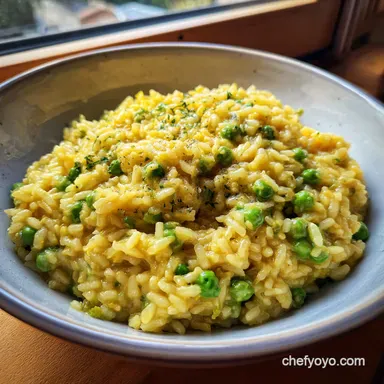
Saffron Pea and Lemon Risotto the Managed Method
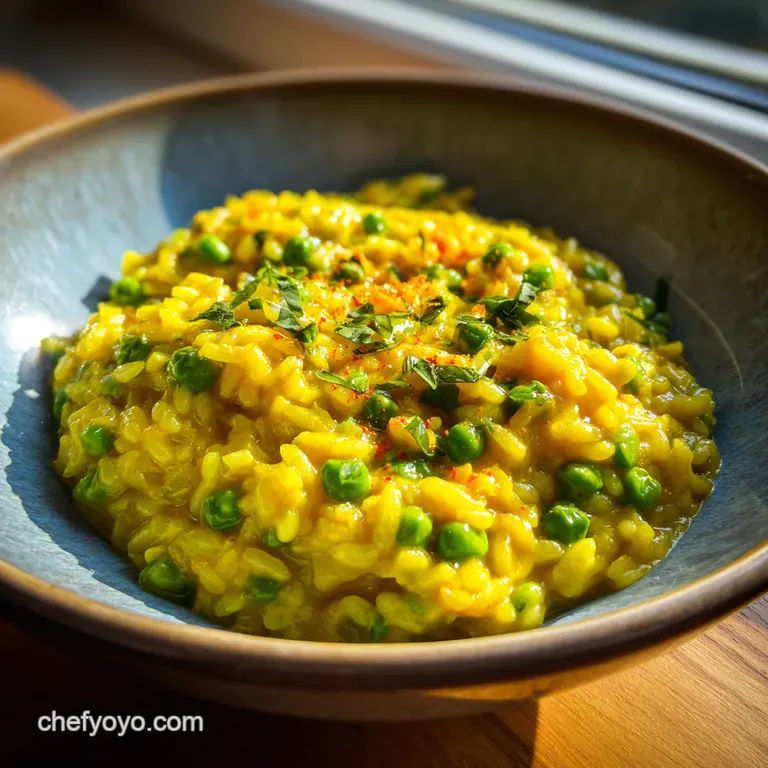
Seriously Simple, Perfectly Managed Risotto (Saffron & Pea)
The Risotto That Demands Your Attention
Ever attempted making risotto only to end up with a pan of heavy, starchy glue? Oh my gosh, I totally relate! For years, I felt like the kitchen gods were against me.
But then I realized that true Italian risotto isn't a passive dish; it's a dish that must be carefully managed from start to finish.
This authentic saffron and pea risotto is the recipe that changed everything for me. It’s not just food; it’s one of the best skill building classic Italian recipes you can master.
It forces you to embrace active cooking methods , which is exactly where the magic happens!
More Than Just Rice: An Italian Lesson
Risotto is the ultimate definition of Italian comfort food. Originating in Northern Italy, especially the Milan region where saffron (used famously in Risotto alla Milanese ) is king, it's a celebration of simplicity and technique.
We aren't just boiling rice; we are demonstrating pure culinary discipline in cooking .
I know, that sounds fancy, but trust me, it’s medium difficulty. The ingredients are simple, but the process requires consistent, loving attention no slacking off allowed!
We’re aiming for that beautiful, velvety texture known as how to achieve all'onda texture (the finished risotto should flow like a soft wave).
This recipe yields four hearty portions and only takes about 45 minutes of total commitment.
Why This Recipe Is a Game Changer
What makes this risotto different? It teaches you the art of precise temperature control cooking . This is key because adding cold stock will shock the rice grains and stop the starch from dissolving, ruining the creaminess.
Learning to control the heat and managing hot stock additions simultaneously is the real skill here.
You’ll quickly learn the difference between Arborio versus Carnaroli rice comparison ; both work, but Carnaroli holds up slightly better under the constant attention needed for the continuous stirring risotto technique .
Plus, the vibrant yellow saffron and bright spring peas make it look absolutely stunning.
The final few minutes are the most important. We unlock the mantecatura secrets that mandatory step of stirring in cold butter and cheese off the heat.
That’s what takes this from good to glorious. It’s perfect for a weekend dinner when you actually want a rewarding project, you know?
Ready to grab your spoon and start the stirring marathon?
Gear Up for the Creamy Dream: Ingredients and Essential Kit
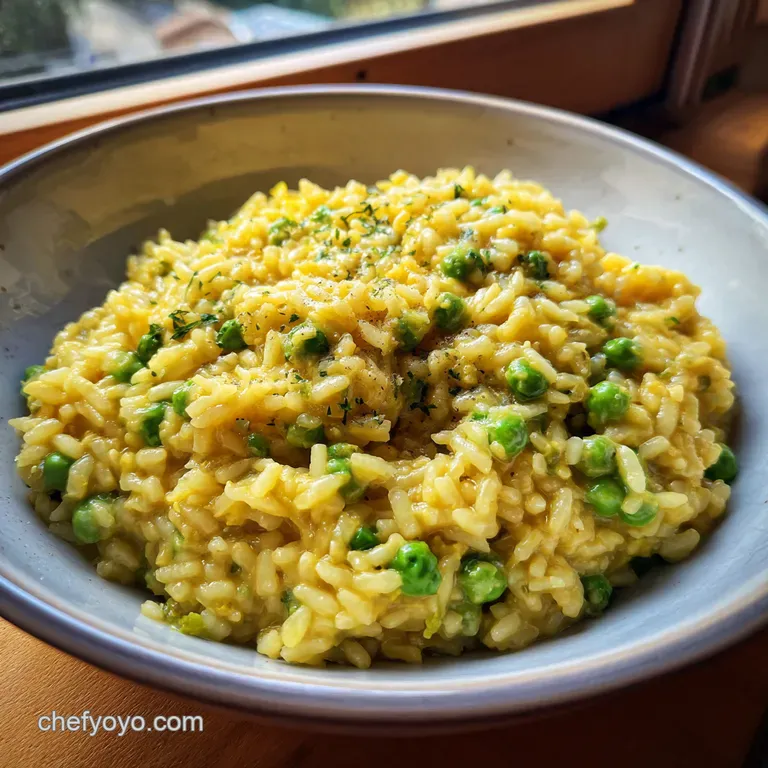
Risotto isn't just a recipe; it's a true test of culinary discipline in cooking . You can’t just chuck everything in.
Getting these basic bits right is your foundation. This dish is seriously one of the most rewarding skill building classic Italian recipes you can tackle.
The Essential Line-up
Let’s talk rice first. The star has to be the rice! You need 360g (about 1 ¾ cups) of Arborio or Carnaroli.
I prefer Carnaroli; it’s known as the "King of Rice" because it stands up beautifully to the continuous stirring risotto technique .
Arborio works well too, though! You absolutely must not rinse it. That exterior starch is what creates the legendary creaminess.
For the liquid, we need 1.2 litres (5 cups) of hot, simmering stock. This is crucial for managing hot stock additions .
Seriously, if you use cold stock, you shock the rice. It tightens up, the starch release stops, and you end up with gluey, sad rice.
I learned that the hard way, many years ago, and I nearly cried.
Flavor and Finish Secrets
The deep golden colour of this authentic saffron and pea risotto comes from a tiny bit of saffron. You only need about 0.
5g (a small pinch) of good quality saffron threads. Don't skimp here; it makes a huge difference.
The real magic happens right at the very end, thanks to the fat. We use 60g (4 Tbsp) of cold, cubed unsalted butter and Parmesan.
These are the mantecatura secrets ! They are added off the heat to emulsify everything perfectly. This is part of the active cooking methods that ensure we know how to achieve all'onda texture that lovely wave effect.
A squeeze of fresh lemon juice cuts through the richness beautifully, making the flavour pop.
Tools for Temperature Control
You don’t need much, but what you use matters massively for precise temperature control cooking .
You absolutely must have a heavy bottomed, 4-quart (4 litre) saucepan or a Dutch oven. This is your best friend. Why? It distributes heat evenly and stops that dreaded scorching on the bottom.
I once tried making risotto in a flimsy pan and ended up scraping burnt rice off the base for days.
Never again.
You also need a dedicated ladle for the stock additions. This is key to making sure the liquid is perfectly managed .
You add just enough liquid to barely cover the rice, and then you stir, stir, stir. This control is what builds the perfect texture.
Keep that wooden spoon handy for the constant gentle stirring!
Mastering the Management of Risotto
Honestly, for years, I ruined risotto. It was either gluey or crunchy. Making a truly authentic saffron and pea risotto requires real focus.
It is one of those beautiful skill building classic Italian recipes . You cannot just walk away! It demands active cooking methods .
That is why I call this 'The Managed Method.' It shows brilliant culinary discipline in cooking . Before we even touch the pan, let us get organized.
Prep Power: The Mise en Place Magic
Oh my gosh, you need everything ready. Seriously. Measure your rice (use Carnaroli if you can find it it handles stirring better, see our Arborio versus Carnaroli rice comparison ).
Chop those shallots super fine. The most vital step? The stock. You must keep it steaming hot. This is crucial for managing hot stock additions .
I cannot stress that enough. A cold stock splash shocks the rice. That stops the starches from releasing smoothly. I learned that the hard way, burning my first batch!
The Managed Stirring Technique
This is where we put in the work. It is an exercise in patience.
- Toast it Right (Tostatura): Soften the onion slowly. Add the rice. Stir constantly over medium heat for 2 minutes . You want nutty smells. That tostatura seals the starch inside.
- Wine Wash: Pour in the wine. Stir hard until it disappears. No more boozy smell!
- The Hot Drip: Start managing hot stock additions . Add just one ladle of the hot, saffron infused stock. Stir until it almost vanishes. This is the continuous stirring risotto technique in action.
- Repeat and Observe: Repeat the ladle addition process. Only add more stock when the previous liquid is absorbed. We are looking for precise temperature control cooking here. Keep the heat medium low. No violent boiling!
- Pea Addition: After about 15 minutes of dedicated stirring, chuck in your frozen peas. They heat up fast.
- The Al Dente Check: After about 18 minutes , taste it. It must be tender but still firm in the centre.
The Secret Mantecatura Finish
You are almost there. Do not ruin the texture now!
Pro Tip 1: Cold Fat Finish. Pull the pot off the heat. Immediately stir in the remaining cold butter and Parmesan.
These are the mantecatura secrets . The cold fat emulsifies the released starch. It makes it ultra creamy.
Pro Tip 2: The Rest. Cover the pot. Walk away for 3 minutes . This rest is non-negotiable. It truly makes the dish.
Pro Tip 3: The Wave. Stir vigorously one last time. If you shake the pan, the risotto should gently flow like a wave.
That is how to achieve all'onda texture . When you have successfully managed this whole process, the result is pure Italian luxury.
It is worth every single minute of stirring!
What Happens Next: Your Recipe Notes
Honestly, tackling an authentic saffron and pea risotto feels like a proper cooking project. It’s one of the best skill building classic Italian recipes out there.
I remember staring at the pot the first time, realizing this wasn't passive cooking. Achieving that silky smooth finish requires true culinary discipline in cooking .
The whole process has to be carefully managed from the first ladle of stock to the final rest.
Showing Off the Skill: Serving Suggestions
The real test of how you managed the rice is the all'onda finish. This literally means "like a wave." When you serve it, the risotto should spread slightly, not sit like a solid brick.
To highlight how to achieve all'onda texture , serve it immediately and don't overcrowd the plate. Think simple elegance.
I love setting the table with big, shallow bowls. A final flourish of finely grated Parmesan and maybe a sprinkle of chives is all you need.
For drinks, keep it fresh. A crisp, dry white wine maybe a lovely Sauvignon Blanc or Italian Soave is brilliant for cutting through the richness created by those essential mantecatura secrets .
The Day After: Storage and Reheating
Let's be real: leftover risotto is a challenge. Risotto gets thick, fast! Storing it is easy. Pop any leftovers into an airtight container and refrigerate for up to 3 days .
Freezing is generally a no-go, as the texture becomes totally non-human vertebrae when thawed.
Reheating requires strategy. Don't microwave it dry! Heat a splash of stock or water in a pan. Then add the risotto and stir vigorously.
You need to recreate the texture by managing hot stock additions again. This is where your mastery of the continuous stirring risotto technique comes back into play, even with leftovers.
You can definitely bring it back to life, but it needs a little TLC.
Swap Outs: Variations and Adaptations
For those needing a gluten-free meal, you are already winning! Rice is naturally GF. If you’re catering for vegans, simply swap the butter and Parmesan for quality olive oil and a few tablespoons of nutritional yeast.
That flavour punch is a great substitute.
If spring peas are history, no worries! This recipe works beautifully with seasonal swaps. Think finely diced roasted butternut squash in autumn.
A note on grains: if you see Carnaroli rice, grab it! The Arborio versus Carnaroli rice comparison is easy Carnaroli costs more but it holds its shape better, making it almost fool proof against overcooking.
Why We Bother: Nutrition Basics
This authentic saffron and pea risotto is comfort food that gives back. Risotto uses active cooking methods and focused stirring.
You’re getting complex carbohydrates from the rice, which gives you sustained energy. The saffron offers powerful antioxidants, and those green peas bring fibre and vitamin K to the party.
Plus, knowing you mastered a dish requiring precise temperature control cooking ? That’s good for the soul.
Keep practicing those stirring skills. You’ll be serving up creamy, flowing risotto every time!
Frequently Asked Questions
Why do you call this "managed" risotto? Isn't stirring just normal?
While all risotto requires stirring, we call this the "managed" method because it emphasizes the continuous discipline needed to achieve perfection. It demands precise control over heat, stock temperature, and liquid additions.
This isn't just stirring; it’s an active process of managing the starch release the difference between achieving that elegant, flowing all’onda texture and ending up with a sad, stodgy pile. Think of it as keeping a stiff upper lip during a delicate culinary operation!
My final risotto is gluey and thick, not creamy and flowing. What went wrong with the management?
Ah, the bane of every risotto cook! If your rice is gluey, you likely added the stock too fast, drowning the rice and causing the starch to release unevenly. Remember, only add the next ladle of hot liquid once the previous addition is almost fully absorbed.
Also, ensure your heat is not too low; you need a consistent, gentle simmer to encourage smooth starch release, otherwise the cooking process stalls.
Is it true that you can't save risotto? What's the best way to handle leftovers from this saffron managed recipe?
Risotto, much like a good roast dinner, is best served on the day. When refrigerated, the starch firms up, turning the lovely creamy texture into a solid block. However, if you do have leftovers, the Italian way is to transform them!
Cool the mixture quickly, shape it into small balls, stuff with cheese (if you like), coat in breadcrumbs, and deep fry to make incredible arancini a delicious second act for your rice.
I have a guest who can't eat dairy. How can I adapt the finish (Mantecatura) without Parmesan and butter?
No bother at all! Achieving that luxurious creamy mouthfeel without dairy is completely doable. For the butter, use a good quality vegan butter block or extra virgin olive oil. To replace the Parmesan, stir in 2-3 tablespoons of nutritional yeast (often called 'nooch') at the end for that cheesy, umami flavour.
Finish with a tablespoon of cashew cream or oat cream for extra richness.
Do I really need to keep the stock hot for 20 minutes? What happens if I use room temperature stock?
Yes, keeping the stock piping hot is non-negotiable for success! Adding cold or even room temperature stock will shock the rice grains every time you pour it in, halting the cooking process and tightening the starch molecules.
This prevents the smooth, continuous release of starch needed to create that hallmark velvet texture, resulting in tougher, less creamy risotto. Keep it simmering constantly it’s crucial to the "managed" technique.
I need more protein in my meal. What additions won't ruin the delicate saffron flavour?
That's a sound culinary choice! The delicate saffron and pea flavours pair beautifully with light proteins. We suggest stirring in some pan-seared scallops or prawns (shrimp) during the final five minutes of cooking, allowing them to warm through gently.
Alternatively, if you prefer meat, adding a finely diced, pre-cooked Italian sausage (removed from its casing) provides both flavour and substance without overwhelming the dish.
Saffron Pea And Lemon Risotto The Managed Method