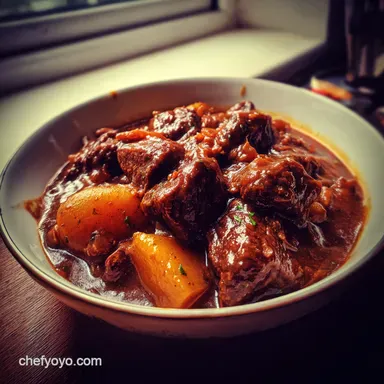
The Great British Managed Beef Ale Stew
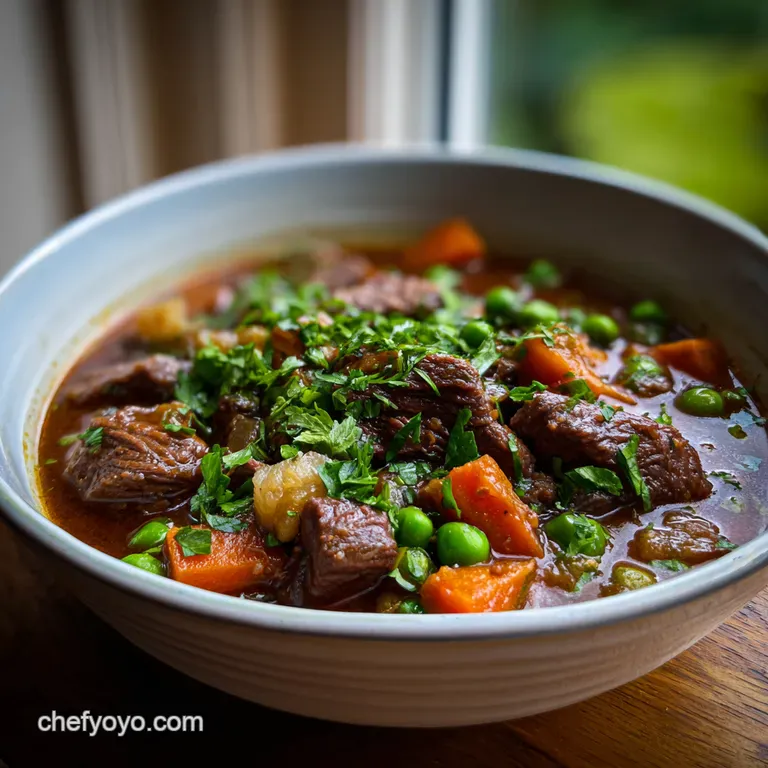
- The Great British "Managed" Beef & Ale Stew: Low Stress, High Flavour
- Why This Stew is Comfort Food Royalty
- The Secret to Truly Tender Beef
- Prepping the Perfect Pot: Ingredients for Deep Flavour Development
- Kitchen Secrets: Building the Deep Flavour Development
- The Secret Life of Stew: Tips, Swaps, and What to Know
- Serving Up Your Sunday Comfort Food Stew
- Keeping Your Managed Beef Stew Recipe Fresh
- Quick Swaps & Controlled Heat Management Adaptations
- A Quick Look at the Good Stuff
- Frequently Asked Questions
- 📝 Recipe Card
The Great British "Managed" Beef & Ale Stew: Low Stress, High Flavour
Oh my gosh, is there anything better than walking into a house that smells of proper stew? Honestly, sometimes I think I can taste the cold rain and the warm pub fire in a good stew.
But here is the thing: most home stews are rubbish tough meat and watery sauce. This is not that recipe. This Managed Beef Stew Recipe changes everything.
We are talking maximum flavour payoff for minimal fuss once it’s in the pot.
We aren't stressing here, but we are being incredibly clever about the initial steps. The "management" is all about Controlled Heat Management at the start.
That means mastering How to Sear Beef in Batches properly. This is the secret handshake to unlocking that rich, deep, savoury foundation.
Without that crucial crust, you just have boiled beef, and nobody wants that, you know?
Why This Stew is Comfort Food Royalty
This is peak Sunday Comfort Food Stew , the kind of grub that makes life better. This isn't some quick weeknight meal.
We use a sturdy stout or porter to make a true Authentic British Stout Stew . That dark ale cuts through the richness and adds a stunning Deep Flavour Development .
This recipe is the classic Dutch Oven Beef and Ale tradition perfected for your kitchen.
Yes, the cook time is lengthy. We are talking proper Low and Slow Simmering here nearly three hours! But that is exactly how you get that perfect, meltingly soft Tender Beef Chuck Recipe .
The small effort upfront, mostly chopping and using the Deglazing Fond Techniques to grab all those sticky brown bits, sets the flavour for the entire dish.
The Secret to Truly Tender Beef
The beauty of this slow cooking method is the patience required. Did you know the beef starts to relax and get genuinely tender only after about 90 minutes of simmering? We let time do the heavy lifting here.
This process guarantees your beef fibers will break down beautifully, resulting in a hearty, stick-to-your ribs meal. It yields six huge, generous servings.
Just enough for a gathering or excellent leftovers for the week! Trust me, this stew is absolutely worth the wait.
Let's look at the ingredients you will need to get this whole process managed right from the start.
Prepping the Perfect Pot: Ingredients for Deep Flavour Development
Right, let’s talk shopping. You cannot rush the ingredients list for a proper Sunday Comfort Food Stew . Getting the best stuff is the first, crucial step in this Managed Beef Stew Recipe .
We are aiming for deep, savoury flavour. We aren't just cooking; we are building layers.
The Foundation: Meat, Ale, and Depth
For meat, we need 900 g (2 lbs) of Tender Beef Chuck Recipe . Trust me, chuck is fatty and forgiving.
It breaks down beautifully during the long, low and slow simmering . Give it a good trim, but don't obsess. We want some of that fat for flavour.
When it comes to the liquid, this is where the Authentic British Stout Stew magic happens. Grab 440 ml (about 1 pint) of a dark stout or porter.
It needs to be rich. Seriously, no weak, light ale allowed! That rich stout, combined with 480 ml (2 cups) of high-quality beef stock, is the secret weapon for true Deep Flavour Development .
Seasoning & Aromatics for Controlled Heat Management
Honestly, the spices are simple. We rely more on aromatics than powders. Diced onions, celery, and carrots (the holy trinity!) get cooked down low and slow.
Then add four crushed cloves of garlic and 2 tbsp of concentrated tomato paste. Cook that tomato paste for a minute or two.
This tiny step manages to deepen the colour and flavour immensely. It’s essential before we start our Deglazing Fond Techniques .
Don't forget the Worcestershire Sauce . I always add 1 tbsp right before the liquid. It gives the stew a subtle, salty umami boost.
You know, that flavour you can’t quite place but makes everything taste better? That’s the ‘Worc’ sauce doing the work.
Essential Tools for Low and Slow Simmering
This stew requires Controlled Heat Management . This means your equipment is everything. You absolutely need a heavy, thick bottomed pot. For the best result, use a Dutch Oven Beef and Ale .
The cast iron holds heat evenly. This is non-negotiable for success when we tackle How to Sear Beef in Batches .
If your pot is thin, you’ll burn the bottom before the meat gets tender.
No Dutch Oven? That's okay! Find the heaviest casserole dish you own. Just make sure it is oven safe and can handle the consistent, gentle heat of 160° C / 325° F .
A sturdy wooden spoon for scraping up the fond is also a must have. Every speck of that browned bit is pure gold!
Kitchen Secrets: Building the Deep Flavour Development
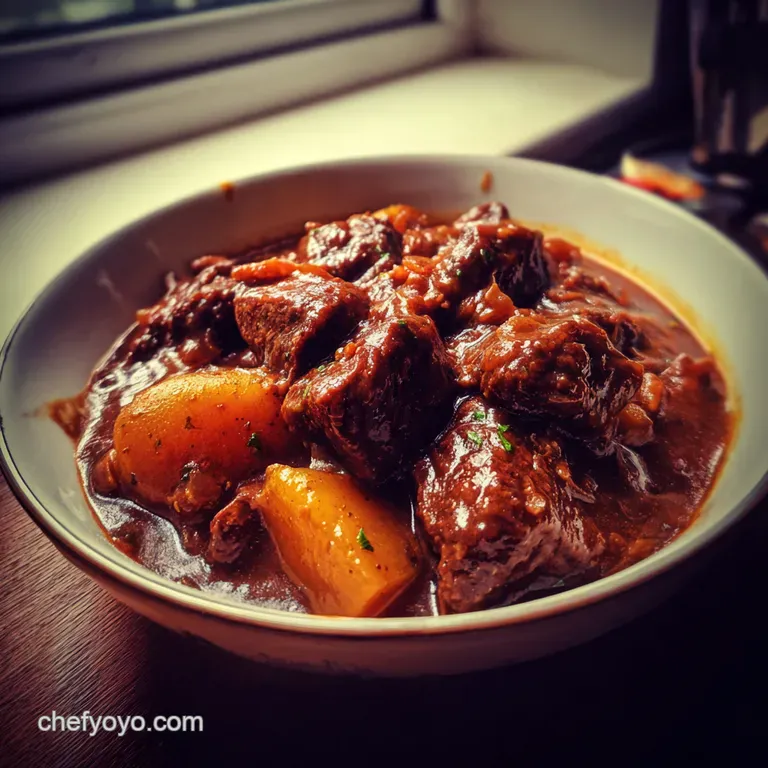
Honestly, is there anything better than a proper, dark, sticky stew on a cold Sunday? Oh my gosh, I used to mess this up constantly.
Tough meat, thin sauce a total disaster. But I finally cracked the code. Trust me, this isn't just a recipe, it's a Managed Beef Stew Recipe designed for maximum flavour and zero stress.
This is proper Sunday Comfort Food Stew done right.
Prep: Setting Up the Tender Beef Chuck Recipe
First, let's talk prep. We’re aiming for the most Tender Beef Chuck Recipe you’ve ever had. Get everything ready first that’s your essential mise en place.
Chop your onions, mince your garlic. If you’re rushing the chopping later, you’ll burn the garlic. We don’t want that!
Now, the beef: pat those 1.5 inch cubes dry, dry, dry! If they are damp, they won't sear. Toss them lightly in that first tablespoon of flour, salt, and pepper.
Time saving organization tip: have a resting plate right next to the stove ready for the seared chunks. We are setting up for success before we even turn on the heat.
Controlled Heat Management: The Maillard Reaction
The real magic starts here: the sear. This step is crucial for Deep Flavour Development . We need Controlled Heat Management in our heavy Dutch Oven Beef and Ale .
Heat your oil until it’s shimmering. Do not rush this step.
You must sear the beef in small batches. Seriously, only sear a handful of cubes at a time. This is How to Sear Beef in Batches .
If you overload the pot, the pan cools down instantly and the meat steams you’ll get grey meat, not brown. You need a dark, crusty sear on all sides (2- 3 minutes per side).
Once that's done, put the beef aside.
Deglazing Fond Techniques and Low Simmering
Now, look at the bottom of your pot. Those sticky, brown bits left behind? That is pure flavour gold! Pour in the stout and scrape all those bits up using Deglazing Fond Techniques .
Let it bubble vigorously for two minutes. This removes the harsh alcohol flavour, leaving behind all the richness needed for an Authentic British Stout Stew .
After the pot is fully deglazed and everything is combined, we are entering the final managed stage: Low and Slow Simmering .
Get that lid on tight and slide the stew into the oven at a mellow 160° C / 325° F .
Now walk away! For 2 hours 45 minutes , the gentle heat will do the heavy lifting. This allows the collagen to break down completely, giving you that fall apart texture.
Trust the process, and you’ll be amazed at the result.
The Secret Life of Stew: Tips, Swaps, and What to Know
Right, you’ve smashed the main event. You’ve mastered the technique of how to sear beef in batches , locked in that crucial deep flavour development , and successfully navigated the long wait.
But the journey isn't over! This section is all about getting the most out of your amazing meal and making sure those leftovers are gold.
Serving Up Your Sunday Comfort Food Stew
Honestly, this Authentic British Stout Stew deserves royal treatment when it hits the plate. You’ve done the low and slow simmering —now make it shine!
My personal rule? Mash. Always mash. We're talking ridiculously creamy, buttery Maris Piper potatoes that are practically liquid. They are essential for soaking up every drop of that rich, dark sauce you’ve created.
Don't forget a side of something sharp and green, like simple blanched green beans or broccoli. It just helps cut through the richness, you know?
For plating, I like a deep, wide bowl. Pile the mash high, ladle the tender beef chuck recipe stew right over the top, and maybe finish with a tiny sprinkle of fresh parsley.
It makes the deep mahogany colour of the sauce really pop. My dad used to say, "A good stew tastes better when it looks like a hug on a plate.
" I think he managed to sum it up perfectly.
Keeping Your Managed Beef Stew Recipe Fresh
The great thing about this specific managed beef stew recipe is that the flavour gets even deeper the next day.
It’s like magic. Those spices and the ale notes meld together beautifully overnight.
Once the stew is completely cool (critical step!), pop it in an airtight container. It’ll be happy chilling in the fridge for up to three days .
If you’re planning ahead or batch cooking, this freezes like a dream too. I usually freeze mine in single portions.
Just reheat it gently on the hob low and slow again until piping hot throughout. Since you managed the heat so carefully the first time, you know how important controlled heat management is for texture.
Quick Swaps & Controlled Heat Management Adaptations
Life happens, and sometimes you need flexibility!
If you need a gluten-free option, don't fret about the flour. I’ve found the best swap is cornflour (cornstarch) mixed with a little cold water a slurry stirred in right at the end.
It thickens instantly without any gluten. Easy peasy!
For a seasonal change, if it’s autumn, swap out some of those carrots for diced swede or parsnips. They add a lovely, earthy sweetness that really complements the richness of the Dutch Oven Beef and Ale .
Trust me, once they’ve cooked down, they are pure gold.
A Quick Look at the Good Stuff
While this is clearly comfort food, it’s proper, hearty fuel. This stew is absolutely packed with protein from the beef, which keeps you feeling full for ages and helps with energy.
Plus, cooking everything low and slow helps the nutrients in those root vegetables become super easy for your body to absorb.
It's solid, honest food that nourishes you from the inside out.
Honestly, cooking this meal is such a rewarding process. You’ve invested the time, you’ve managed the flavour, and now you get to reap the rewards. Enjoy every single spoonful!
Frequently Asked Questions
What exactly is the 'managed' technique, and why is it so important for this beef stew?
The 'managed' technique is all about meticulous control over the searing heat and the low-and-slow simmering process it stops the stew from becoming a rushed disaster. It ensures you build foundational flavour depth by properly searing the beef in small, non-crowded batches, and guarantees a smooth, naturally thickened sauce by maintaining a gentle heat over the long cooking time.
Rushing either of these steps is the difference between a thin, flavourless soup and a hearty, restaurant quality comfort dish.
That’s a long cooking time how do I ensure the meat turns out melt-in-the-mouth tender, not chewy like old boots?
Tenderness truly comes down to patience and using the right cut of beef, which in this case is chuck steak. This cut contains tough connective tissues (collagen) that must cook slowly to break down fully into luscious gelatin, which is what gives the sauce its body.
If your beef is tough after the recommended time, it simply hasn't cooked long enough; cover it back up and give it another 30 to 45 minutes until it falls apart easily when tested with a fork.
I haven’t got any stout or ale on hand. Can I still make this proper British managed beef stew?
Absolutely, you can substitute the ale, though it adds that quintessential malty bitterness and deep colour we love in a good stew. If avoiding alcohol entirely, swap the stout for an equal amount of strong black coffee mixed with 1 tsp of balsamic vinegar; the acidity and dark roast perfectly mimic the stout's complexity.
Alternatively, a full bodied dry red wine, like a decent Merlot, provides a rich, classic depth if you prefer a more French style profile.
Can I make this stew a day ahead, and how should I store or freeze it?
This managed stew is one of those fantastic recipes that tastes even better the next day, as the flavours mature beautifully overnight in the fridge. For storage, cool it completely, then keep it in an airtight container for 3-4 days in the chiller.
If you want to freeze it, transfer the cooled stew to freezer safe containers (leaving a bit of headspace for expansion), and it will keep happily for up to three months; simply reheat gently on the hob until piping hot.
I need a gluten-free option. Can I thicken the managed stew without using plain flour?
Yes, ditching the flour is no bother at all! For a guaranteed gluten-free thickness, the secret weapon is cornstarch (often called cornflour in the UK). Create a slurry by mixing 1 tbsp of cornstarch with 2 tbsp of cold water, then stir this mixture into the simmering stew during the final 15 minutes of cooking.
It will visibly thicken the sauce right before your eyes, maintaining that perfect, rich consistency.
The Great British Managed Beef Ale Stew