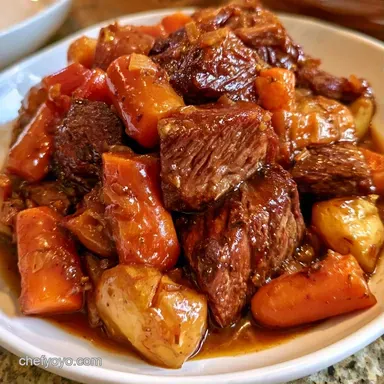
Tender Pot Roast with Beef Chuck

- Time: 20 min active + 3 hrs cooking
- Taste: Savory, rich, and deeply beefy
- Best for: Sunday family dinners
Tender Beef Pot Roast
A staple of American home cooking, pot roast is built on the tradition of turning a tough, affordable cut of beef into something tender through patience. It is the kind of dinner that fills the home with a rich, savory fragrance, signaling total comfort.
You can achieve that signature, fork-tender texture without spending ten hours in the kitchen. This technique prioritizes a dark golden sear and a controlled braise to keep the meat succulent.
The result is a meal where the beef shreds easily and the root vegetables hold their form. It is a rustic, nourishing dish that offers a sense of pure warmth.
Why the Staged Cook Wins
- The Initial Sear: Browning the meat at high heat creates deep flavor compounds that simmering alone cannot produce.
- Delayed Vegetable Entry: Carrots and potatoes only need about an hour to soften, so adding them late prevents them from disintegrating.
Ingredient Deep Dive
- 3 lb beef chuck roast
- 2 tbsp avocado oil
- 2 tsp kosher salt
- 1 tsp freshly cracked black pepper
- 2 cups low-sodium beef stock
- 2 tbsp balsamic vinegar
- 2 tbsp tomato paste
- 4 cloves garlic, smashed
- 1 medium yellow onion, diced
- 2 sprigs fresh thyme
- 1 sprig fresh rosemary
- 2 bay leaves
- 1 lb carrots, cut into 2-inch chunks
- 1½ lb Yukon Gold potatoes, halved or quartered
- 1 cup frozen peas
- 2 tbsp cornstarch
- 3 tbsp cold water
The combination of acidity and collagen is what makes this dish work. The balsamic vinegar cuts through the richness of the beef fat, while the chuck roast provides the gelatin needed for a thick sauce.
What Each Ingredient Does
| Component | Purpose | Substitute Notes |
|---|---|---|
| Beef Chuck | Collagen for tenderness | Shoulder roast: similar result |
| Tomato Paste | Rich color and umami | Tomato puree: use more, less thick |
| Balsamic Vinegar | Acid to balance fat | Apple cider vinegar: more tart |
Gear for This Recipe
You need a 5-7 quart Dutch oven. A heavy bottom is necessary to keep the heat even and prevent the tomato paste from burning. A tight-fitting lid is the most important part, as it keeps the moisture inside the pot.
The Cooking Process
For the Roast & Sear
Step 1: Set your oven to 325°F (163°C).
Step 2: Rub the 3 lb beef chuck roast with 2 tsp kosher salt and 1 tsp black pepper.
Step 3: Heat 2 tbsp avocado oil in a 5-7 quart Dutch oven over medium-high heat until it shimmers. Brown the meat for 5–7 minutes on each side until a deep golden brown crust forms, then set it aside on a plate.

Building the Flavor Base
Step 4: Lower the heat to medium. Sauté the diced yellow onion in the remaining beef fat for 4 minutes until translucent.
Step 5: Stir in the smashed garlic and 2 tbsp tomato paste, cooking for 2 minutes until the paste turns a deep rust color.
Step 6: Deglaze the pot by pouring in 2 cups beef stock and 2 tbsp balsamic vinegar, scraping the bottom with a spoon to release the browned bits.
Executing the Precision Braise
Step 7: Place the beef back into the pot. Add the fresh thyme, rosemary, and bay leaves.
Step 8: Secure the lid tightly and transfer the pot to the oven to braise undisturbed for 2 hours.
Step 9: Remove the pot from the oven and nestle the carrot chunks and halved Yukon Gold potatoes around the meat so they are partially submerged in the liquid.
Step 10: Replace the lid and return to the oven for 45–60 minutes until the beef is fork-tender and hits an internal temperature of 200°F (93°C).

Finishing the Sauce
Step 11: Move the meat and vegetables to a serving platter and tent with foil.
Step 12: Skim any excess oil from the surface of the liquid with a spoon, then return the pot to the burner and bring to a simmer.
Step 13: Whisk 2 tbsp cornstarch and 3 tbsp cold water together, then stir the slurry into the sauce until thickened and glossy.
Step 14: Stir in 1 cup frozen peas as a garnish and serve.

Common Problems and Fixes
When meat is tough, it usually means the collagen hasn't melted yet. This is a temperature and time issue, not a heat issue. Adding more liquid won't fix it, but more time will.
If the sauce feels too thin, you might have had too much liquid in the pot or didn't simmer the slurry long enough. A quick reduction on the stove usually solves this.
Fixing Tough Meat
If the beef resists the fork, put it back in the liquid, cover it, and braise for another 30 minutes.
Correcting Thin Sauce
Simmer the sauce without the lid for 5-10 minutes to evaporate excess water before adding the cornstarch slurry.
| Problem | Root Cause | Solution |
|---|---|---|
| Tough Beef | Under-cooked collagen | Braise for 30 more mins |
| Mushy Veg | Added too early | Add veg in the last hour |
| Greasy Gravy | Unskimmed surface fat | Use a spoon to skim oil |
Storage & Reheating

Refrigerate remaining portions in a closed container for 3 to 4 days, per USDA guidelines on leftovers. The gravy prevents the beef from drying out during storage.
This meal is freezer-friendly; store the meat and sauce together for up to 3 months. To reheat, use a covered skillet on low heat. Stir in a bit of additional beef stock to loosen the sauce. Ensure the beef reaches 165°F (74°C) for safety.
Perfect Complements
This dish is a complete meal, but a few sides make it feel more rustic. I like serving it with a side of buttery mashed potatoes if you want extra creaminess, or a simple crusty baguette to soak up the gravy. Steamed green beans or a crisp arugula salad provide a fresh contrast to the rich beef.
Dietary Adaptations
This dish is naturally dairy-free. To make it gluten-free, choose a certified gluten-free beef stock, as some brands use yeast extract derived from barley.
To lower the sodium, use a "no salt added" beef stock and reduce the kosher salt in the seasoning to 1 tsp. Adding fresh lemon juice at the end will brighten the flavor without adding salt. If you prefer a slow cooker, sear the meat first and then cook on low for 8 hours.
Good to Know
Why does the meat come out dry or tough, and which cut should I buy?
Use beef chuck roast for the best results. This cut has the necessary connective tissue to stay tender and moist during the long braise at 325°F until it reaches an internal temperature of 200°F.
How do I get the fat off the gravy when it is greasy?
Skim the excess oil from the surface of the cooking liquid with a spoon before thickening. This ensures your sauce is glossy and smooth rather than oily.
How many hours does a pot roast take to cook?
The total oven time is roughly 3 hours. The beef braises for 2 hours, followed by another 45 to 60 minutes after the carrots and potatoes are added.
Can I make it the night before guests arrive and reheat it without drying it out?
Yes, prepare the roast in advance and keep it in a sealed container in the fridge. Reheat the beef and gravy together in a covered pan over low heat, adding a splash of beef stock to keep the meat moist, until the beef reaches 165°F (74°C) inside.
Dutch Oven Pot Roast