The Cheesy Heart of Gold Corn Pudding Casserole
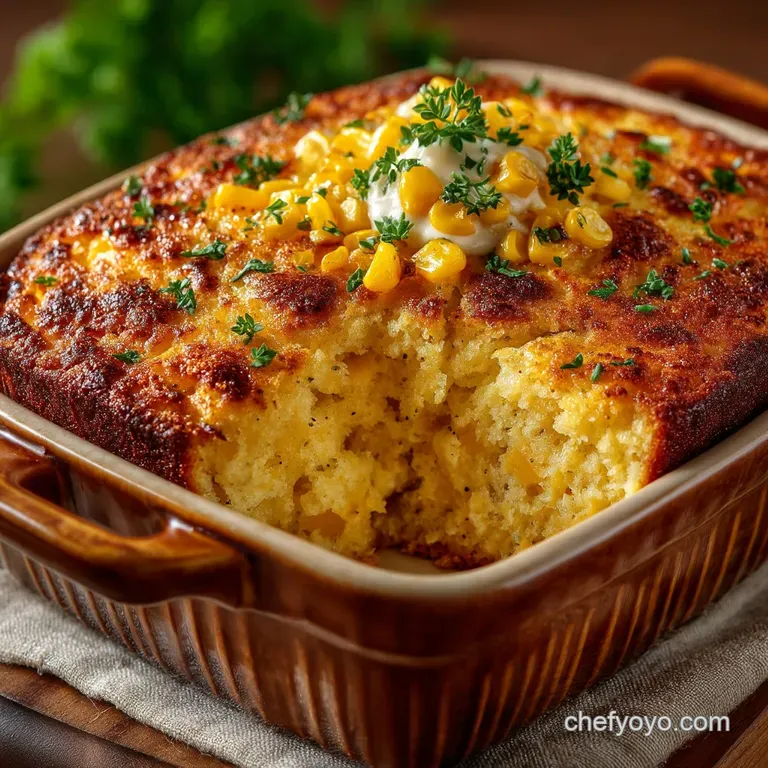
- The Golden Standard of Comfort Baking
- Why This Corn Pudding Casserole Earned Its 'Heart of Gold' Title
- Gathering Your Cast of Golden Ingredients
- Essential Equipment for a Flawless Bake
- Crafting the Perfect Corn Pudding Casserole Batter
- The Transformation: Baking to Golden Perfection
- Troubleshooting and Mastering Your Corn Pudding Casserole
- Elevating the Dish: Savory and Seasonal Variation Ideas
- Storage, Freezing, and Reheating Best Practices
- Recipe FAQs
- 📝 Recipe Card
The Golden Standard of Comfort Baking
Few Dinner Sides possess the universal appeal and deep satisfaction offered by a perfectly baked Corn Pudding Casserole . This dish, a true staple of regional American cooking, and a beloved feature in many Southern Living kitchens, transcends the simple vegetable side and becomes a profound comfort food experience.
Unlike many starchy casseroles, this recipe delivers a delicate, almost silky custard base cradling plump corn kernels, topped by a glorious, golden-brown crust. It is dependable, remarkably easy to prepare, and guarantees rave reviews every time it graces the table.
Why This Corn Pudding Casserole Earned Its 'Heart of Gold' Title
Our approach prioritizes texture and pure corn flavour above all else. We are building a truly artisanal side dish, maximizing richness without complexity, resulting in the Cheesy Heart of Gold Corn Pudding Casserole —a recipe that delivers maximum flavour return for minimal prep time (just 10- 15 minutes).
Ditching the Dry Mix: Achieving Ultimate Creaminess
Achieving that luxurious, melt-in-your-mouth texture requires deliberate ingredient choices. While the convenience of a corn pudding casserole jiffy mix is undeniable, relying on a pre-packaged powder usually yields a denser, almost cornbread-like result.
To create a true, velvety custard, we opt for a pure corn pudding casserole without jiffy mix . Instead, we use a simple binder of all-purpose flour, combined with eggs and milk, which sets gently during baking. This method is the secret to a lighter, richer, and far creamier final product.
A Study in Simplicity: Mastering the Easy Process
Despite avoiding convenience shortcuts, this corn pudding casserole recipe is proudly straightforward. It maintains its "Easy" difficulty rating because it requires no specialized techniques, just basic whisking and gentle folding.
The entire active preparation process is a fast, efficient assembly line designed to get the mixture into the oven in under 15 minutes, allowing the heat to do the heavy lifting.
Sweet vs. Savory: Balancing the Flavor Profile
The inherent sweetness of fresh corn is one of the dish’s greatest assets, but a truly great casserole needs balance. We use just one tablespoon of granulated sugar to highlight the corn's natural sugars, and then counter that sweetness with sharp, savoury notes.
Fine sea salt, freshly ground black pepper, and an optional, subtle whisper of cayenne pepper add necessary depth and warmth, preventing the dish from leaning too far into dessert territory.
Gathering Your Cast of Golden Ingredients
For a perfect texture, remember the baker's golden rule: use room temperature ingredients. You will need three large eggs and one cup of milk (whole or 2%) brought to room temperature before mixing.
You also require one stick (eight tablespoons) of melted unsalted butter, a 14.75 oz can of Creamy Corn (creamed corn), and one cup of frozen sweet corn kernels, thawed. For the savoury binder, have 1/2 cup of all-purpose flour, one teaspoon of baking powder, and generous seasoning ready.
Essential Equipment for a Flawless Bake
You don't need specialty tools to bake this classic. A standard 9x13 inch glass or ceramic casserole dish is ideal for achieving the proper depth and ensuring the mixture cooks evenly.
Beyond that, a large mixing bowl for the wet ingredients, a medium bowl for the dry mixture, a simple whisk, and a flexible rubber spatula are all you need to assemble this Corn Pudding Casserole .
Deciphering the Corn Requirement: Fresh, Frozen, or Canned?
Our recipe leverages the power of two corn types to build texture and flavour. We use a whole can of corn pudding casserole with creamed corn —do not drain this, as it forms the essential, rich liquid base of the custard, providing that signature sweetness and moisture.
This is paired with one cup of thawed, slightly drained frozen corn kernels, which provide bursts of firmer texture throughout the creamy base.
The Secret to Velvety Custard: Dairy Choices Explained
The foundation of the smooth custard relies on high-quality dairy and fat. Use unsalted butter, melted and cooled slightly so it doesn't cook the eggs prematurely. The choice of whole or 2% milk is yours; whole milk delivers maximum richness, but 2% works effectively without drastically altering the final set.
Critically, ensure both the milk and eggs are at room temperature to encourage a seamless emulsion with the melted fat.
Selecting the Perfect Cheese for a Savory Hint
The cheese topping is technically optional but highly recommended to round out the flavour profile. Half a cup of sharp cheddar cheese, freshly grated, adds a wonderful salty, pungent note that beautifully contrasts the sweet corn. For a richer, nuttier flavour, consider substituting Gruyère instead.
Prep Ahead: Mise en Place for Speedy Assembly
To achieve the total 15-minute prep time, a quick mise en place is essential. Preheat your oven to 375°F (190°C), generously grease your 9x13 inch baking dish, and melt the stick of butter.
Allow the butter to cool on the counter while you gather the remaining ingredients, ensuring it's no longer hot when it meets the room-temperature eggs.
Related Recipes Worth Trying
- Our Best Creamy Corn Chowder Recipe Rich Hearty and Ready in 55 Mins — Forget tins This simple Creamy Corn Chowder recipe uses smoky bacon and velvety cream for the ultimate hearty supper So comforting like a hug in a bowl
- The Proper Crisp Crispy Corned Beef with Dijon and Peppercorns — Transforming leftovers This Crispy Corned Beef with Dijon and Peppercorns recipe makes a stunning weeknight dinner Get the secret to a perfect crust
- The Ultimate Baked Ziti Casserole Recipe Slow Ragu — Forget watery pasta This proper Baked Ziti Casserole recipe uses a slowsimmered ragu and creamy ricotta for the depth of flavour you crave Easy Italian...
Crafting the Perfect Corn Pudding Casserole Batter

The mixing process must be executed in phases to ensure the final product is light and creamy, not heavy and tough. First, the wet ingredients and corn are whisked together gently to incorporate the melted butter, eggs, milk, sugar, and both the canned and thawed corn kernels. The key is incorporation, not aeration.
Next, the dry ingredients, flour, baking powder, salt, pepper, and cayenne, are whisked thoroughly in a separate bowl. This prevents pockets of baking powder from causing uneven rising.
The Transformation: Baking to Golden Perfection
Once the ingredients are combined, the mixture is baked for 45–50 minutes, transforming the raw batter into a cohesive, golden culinary marvel.
Phase One: Combining the Wet Ingredients Smoothly
In your largest bowl, start by lightly whisking the three room-temperature eggs. Whisk in the milk, the cooled melted butter, the canned Creamy Corn , the corn kernels, and the tablespoon of sugar until fully incorporated.
Phase Two: Gently Folding in the Solids and Corn
Introduce the bowl of pre-mixed dry ingredients slowly into the wet mixture. Use a rubber spatula or whisk to fold them together. This step is non-negotiable: stop mixing the very moment the last streaks of white flour disappear.
Overworking the batter activates the gluten in the flour, resulting in a tougher, less creamy casserole, undermining the whole goal of this superior corn pudding casserole recipe .
Testing for Doneness: The Wiggle and the Crust
The casserole bakes in two stages. The initial bake lasts 30 minutes, allowing the edges to set while the centre remains jiggly. At this point, retrieve the dish and evenly sprinkle the 1/2 cup of cheese over the surface.
Return it to the oven for the final 15–20 minutes. Doneness is reached when the edges are bubbling golden brown and a knife inserted into the centre comes out mostly clean, like testing a dense quiche or cake.
The Crucial Resting Period Before Serving
Patience is required post-bake. After removing the golden casserole from the oven, let it rest for 5–10 minutes on a wire rack. This critical thermal rest allows the custard to finish setting through carryover cooking, ensuring that when you scoop the Corn Pudding Casserole , it maintains its shape and exquisite creamy texture without collapsing or becoming mushy.
Troubleshooting and Mastering Your Corn Pudding Casserole
To ensure your baking success, always pay attention to ingredient temperature. Using cold milk and eggs can cause the melted butter to seize or the mixture to curdle during mixing, leading to a grainy or uneven final texture.
For cooks worried about the edges setting before the centre, employ the "water bath hack." Place the casserole dish inside a larger roasting pan and fill the outer pan halfway with hot water (a bain-marie). This trick stabilizes the temperature and creates moist heat, guaranteeing a silken custard throughout.
Elevating the Dish: Savory and Seasonal Variation Ideas
Once you have mastered the foundational Corn Pudding Casserole , it’s easy to adapt it for seasonal meals. For a hearty, savoury holiday side, incorporate 4 strips of cooked, crumbled bacon and 1 teaspoon of fresh thyme leaves into the batter before baking.
If you prefer a bit of southwestern flair, transform it into a Tex-Mex marvel by adding a small can of drained diced green chilies and substituting the sharp cheddar topping with Pepper Jack cheese.
Storage, Freezing, and Reheating Best Practices
This casserole is a champion of make-ahead meals. Once cooled, cover leftovers tightly and store them in the refrigerator for up to three days. Reheat individual portions gently in the microwave or place the whole dish back in a 350°F (175°C) oven until warmed through.
Preventing a Mushy Center or Crumbly Edges
If your casserole is too mushy, it likely needed more time to set, or you skipped the crucial 5–10 minute resting period post-bake. Conversely, crumbly or tough edges are usually a sign that you overmixed the batter, activating too much gluten from the small amount of flour we used for binding.
Stick precisely to the "mix only until just combined" rule.
Making This Dish gluten-free or dairy-free
This recipe adapts beautifully to dietary needs. For a gluten-free Corn Pudding Casserole , substitute the all-purpose flour with an equal measure of a certified gluten-free all-purpose baking blend containing xanthan gum.
To go dairy-free, utilize high-quality vegan butter and switch the whole milk for full-fat oat milk or cashew milk.
Batch Cooking and Planning for Holiday Meals
Since the corn pudding casserole recipe is reliable and uses standard pantry ingredients, it’s ideal for batch cooking or doubling the portion size for large holiday gatherings. You can easily prep two 9x13 dishes simultaneously.
While freezing a fully baked casserole is possible, the texture can suffer upon thawing; for best results, plan to bake it fresh the day before or the day of serving.
Expert Pairings: What to Serve Alongside This Comfort Food
This deeply rich and comforting dish needs a protein that can stand up to its depth. As one of your key Dinner Sides , the Corn Pudding Casserole pairs excellently with classic roasted meats, such as glazed ham, prime rib, or traditional roast turkey.
To cut through the richness of the Creamy Corn and butter, consider a bright condiment like homemade Red Pepper Jam or a sophisticated dollop of Smoked Paprika Crème Fraîche. A chilled, crisp Sauvignon Blanc is the perfect wine pairing.
Recipe FAQs
This Corn Pudding Casserole looks like a stunner for Sunday lunch. Can I make it ahead of time, and how should I store the leftovers?
Yes, absolutely! This is a brilliant ‘make-ahead’ dish, perfect for keeping things calm on a busy hosting day. You can mix the entire batter, pour it into the prepared dish, cover it tightly (like you're wrapping up treasure), and keep it chilled in the fridge for up to 24 hours.
Just remember to let it sit on the counter for about 30 minutes before baking, and add an extra 5-10 minutes to the total bake time. Leftovers keep beautifully in an airtight container for 3–4 days; just reheat gently until piping hot.
I'm worried about getting that proper wobbly, velvety texture. How can I tell when my corn pudding casserole is perfectly cooked?
The key is avoiding the dreaded ‘brick’ effect! The casserole is done when the edges look set and golden brown, but the very centre still has a slight, polite wobble, think a very firm quiche or crème brûlée.
Use the chef's knife test: insert a clean knife near the middle; if it comes out mostly clean, you’re laughing. Crucially, remove it from the oven immediately and let it rest for 10 minutes afterwards; this allows the custard to firm up beautifully before you slice into it.
I want to turn up the flavour volume a bit, maybe add some bacon or spice. What are your best suggestions for jazzing up the flavour profile?
If you fancy something more savoury and fit for a feast, stir in four rashers of crumbled crispy bacon and a teaspoon of fresh thyme, it screams festive holiday dinner. For a bit of subtle heat, embrace the Tex-Mex variation: add one small, drained can of diced green chillies (not too hot, promise) and swap the cheddar for Pepper Jack cheese.
Remember, a pinch of cayenne in the original recipe already provides a lovely little warmth without being overtly spicy.
I only have fresh corn on the cob. Can I use that instead of the canned or frozen corn called for in the recipe?
You certainly can use fresh corn, which offers a brilliant sweetness! You'll need about 1.5 cups of kernels scraped from the cobs. The crucial bit, however, is the creamed corn, as it provides the necessary liquidity and body for the custard.
If you must substitute the creamed corn, try pureeing about 1 cup of cooked fresh kernels with a splash of milk or cream until it reaches a thick, creamy consistency, and use that as the base.
I have guests with dietary needs. Can I easily adapt this recipe to be gluten-free or dairy-free without sacrificing the richness?
It’s surprisingly adaptable! For a gluten-free option, simply substitute the all-purpose flour with an equal amount of certified GF all-purpose baking blend, or swap it for fine cornmeal for a lovely rustic texture.
If going dairy-free, use a quality plant-based whole milk (like full-fat oat or cashew milk) and swap the melted butter for high-quality vegan butter. The result will be slightly less rich, but still a cracking good side dish!
Creamy Corn Pudding Casserole Recipe Without Jiffy Mix