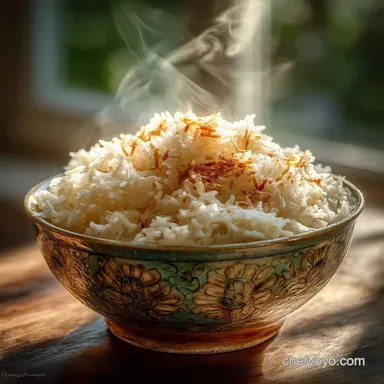
The Fluffy Foundation Perfect Steamed Jasmine Rice
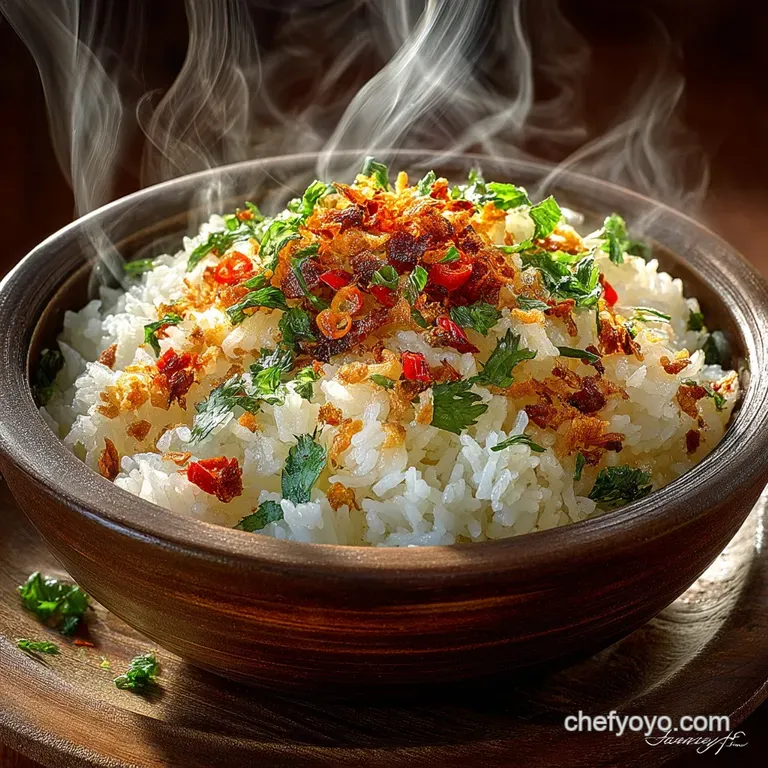
- The Aromatic Secret: Why Jasmine Rice Matters
- From Pantry to Plate: Achieving Restaurant-Quality Texture
- Essential Components for Fluffy Jasmine Rice
- The Stovetop Method: Step-by-Step Perfection
- Troubleshooting and Advanced Jasmine Rice Techniques
- Storage, Reheating, and Nutritional Breakdown
- Recipe FAQs
- 📝 Recipe Card
The Aromatic Secret: Why Jasmine Rice Matters
Jasmine rice is far more than just a simple starch; it is the essential, aromatic foundation of authentic Southeast Asian cuisine. Known as hom mali (fragrant rice) in Thailand, this long-grain variety carries a subtle, natural floral scent, often described as akin to freshly popped popcorn.
When cooked correctly, it provides a soft, moist, and slightly clingy texture, the absolute perfect canvas for soaking up the rich, complex sauces of curries and stews. Achieving Perfect Jasmine Rice is non-negotiable for vibrant dishes, making this mastery of jasmine rice cooking an essential skill for any home cook looking to replicate global flavors.
From Pantry to Plate: Achieving Restaurant-Quality Texture
The difference between mediocre, sticky rice and restaurant-quality fluffy rice lies in precise execution. Mastering this requires not just the right ingredients, but a strict adherence to technique, which includes the critical steps of rinsing, ratio, and resting, all woven into a comprehensive Jasmine Rice Cooking Guide .
Decoding “Hom Mali”: Understanding the Floral Aroma
The hom mali designation highlights the inherent quality of this grain. Unlike Basmati, which tends to be drier and nuttier, Jasmine rice remains soft and subtly aromatic, allowing it to compliment, rather than compete with, the intense flavors of Thai Green Curry or Malaysian Beef Rendang.
Its soft structure requires careful handling during the cooking process to maintain individual kernel integrity.
The Essential Ratio: Water Dynamics Explained
One of the most critical steps in the entire jasmine rice recipe is getting the fluid balance correct. We use slightly less water for Jasmine rice than for standard long-grain varieties because its texture is naturally softer.
The ideal jasmine rice to water ratio for the stovetop method is 1 cup of dry rice to 1 1/4 cups of cold water. This specific measurement ensures that all the liquid is absorbed and properly converted to steam, which is vital for the resting phase.
Addressing the Starch Question: Is Rinsing Always Necessary?
Yes, rinsing is always necessary when preparing white Jasmine rice. Raw rice grains carry surface starch that, if left unwashed, releases during cooking and acts as a binder, resulting in a thick, gummy, and sticky mass.
The goal of this preparation is to remove that starch entirely, guaranteeing separate, fluffy kernels.
Essential Components for Fluffy Jasmine Rice
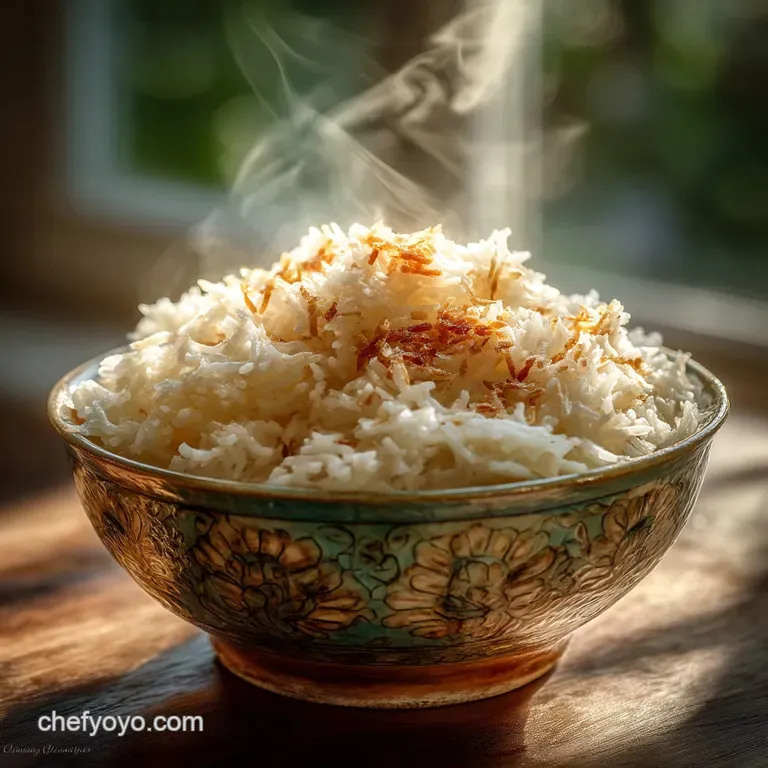
Preparation starts with selecting high-quality ingredients and ensuring you have the right setup, simplifying the subsequent steps.
Selecting the Best Jasmine Rice Brand
Always opt for a high-quality variety labelled explicitly as fragrant or hom mali rice. While the ingredient list is intentionally minimal, flavor can be enhanced with small additions.
For four servings, incorporating a mere 1/4 teaspoon of fine sea salt and 1/2 teaspoon of unsalted butter or oil (the latter also prevents sticking) adds richness without overpowering the grain’s natural scent.
The Crucial Rinse: Achieving Crystal Clarity
This is perhaps the most fundamental of all Easy Jasmine Rice Cooking Tips . Measure 1 cup of jasmine rice and place it into a fine-mesh sieve or bowl. Run cold water over the grains, gently swirling them with your hand.
You must continue rinsing and draining the cloudy, milky water until the water running off the rice is completely clear. This short, 5-minute process is non-negotiable for achieving truly fluffy rice.
Required Gear: Choosing the Right Pot and Lid
Heat distribution is key to preventing scorching. Use a heavy-bottomed saucepan for superior heat retention and dispersal. Crucially, the pot must be paired with a very tight-fitting lid. If your lid is loose, you risk losing the steam necessary for the final cooking stage.
After cooking, you will need only a fork, never a spoon, for gently separating the grains.
Related Recipes Worth Trying
- Ultimate Homemade Tteokbokki Recipe Fiery Korean Rice Cakes — Stop relying on kits Learn how to make Tteokbokki with a deeply flavoured balanced sauce from scratch Perfect Korean Rice Cake comfort food
- The Easiest Crockpot Chicken Fried Rice Takeaway Fakeaway — Ditch the dry chicken Use your slow cooker to get unbelievably tender chicken for this Simple Crockpot Recipes Chicken ready for a quick stirfry Easy...
- Easy Cajun Dirty Rice Recipe Authentic Louisiana Flavor in 45 Mins — Forget the bland stuff This is the real Cajun Dirty Rice recipe packed with Andouille sausage and the holy trinity Foolproof steps for homemade dirty rice...
The Stovetop Method: step-by-step Perfection
Following this precise methodology ensures that the stovetop provides results equivalent to any dedicated rice cooker, delivering perfectly steamed grains every time.
Combining Rice and Water: The Cold Start Advantage
Transfer the thoroughly rinsed and drained rice (1 cup, or 200g) into your heavy-bottomed saucepan. Add the precise amount of cold water (1 1/4 cups, or 300ml), along with the optional salt and fat.
Starting with cold ingredients ensures the temperature rises gradually and evenly, allowing the rice to hydrate optimally.
Simmering to the Steam Point: Managing Heat Levels
Place the saucepan over medium-high heat and bring the water rapidly to a rolling boil. The moment the surface is bubbling vigorously, immediately reduce the heat to the absolute lowest setting your burner allows, it should just be sustaining a whisper of a simmer.
Clamp the tight-fitting lid onto the pot and leave it undisturbed to simmer for exactly 15 minutes. This step relies on trapping the moisture; lifting the lid, even for a moment, releases the steam necessary for the Jasmine Rice Cooking Guide to succeed.
The Critical Rest: Achieving Maximum Fluffiness
After the 15-minute cooking phase, turn the heat off entirely. Do not lift the lid. Allow the rice to rest, still covered, for 10 full minutes. This period is essential for the steam trapped inside to redistribute moisture evenly throughout the grains, ensuring they are cooked through the center, plump, and separate.
This critical 10-minute rest is the secret to achieving Perfect Jasmine Rice .
Fluffing and Serving: The Final Gentle Touch
Once the total 30-minute process ( 15 minutes cooking, 10 minutes resting) is complete, remove the lid. Using a fork, gently rake through the rice to separate the kernels. Avoid heavy stirring or using a spoon, as this can mash the delicate grains.
Serve the freshly steamed, highly aromatic rice immediately as the perfect complement to your meal.
Troubleshooting and Advanced Jasmine Rice Techniques
Even seasoned cooks encounter issues occasionally, and alternate cooking methods can save significant time without sacrificing quality.
Fixing Undercooked or Mushy Grains
If you discover after the rest period that your rice is still slightly undercooked (it feels hard or chewy in the center), add one or two tablespoons of water back into the pot, quickly replace the lid, and let it steam on the turned-off burner for another 5 minutes.
If your rice is mushy, it likely resulted from using too much water or lifting the lid during the simmer. The best salvage technique for overly wet rice is to spread it thinly on a baking sheet and place it in a low-temperature oven (around 175°F/80°C) for 5 to 10 minutes to help the excess moisture evaporate.
Faster Prep: Cooking Jasmine Rice in the Instant Pot
For cooks seeking speed, using a dedicated appliance or the Instant Pot provides excellent results and is arguably the easiest method for bulk jasmine rice cooking . When using a jasmine rice in rice cooker or pressure cooker, maintain the precise 1:1.25 rice-to-water ratio.
For pressure cooking, set it on high pressure for 3 minutes, followed by a full 10-minute natural pressure release before venting any remaining steam.
Flavor Infusions: Adding Broth or Aromatics
To deepen the complexity of your side dish, substitute the cooking water with an equal amount of chicken or vegetable broth. Alternatively, you can introduce aromatics directly into the pot before boiling.
Adding one or two smashed cloves of garlic, a small piece of bruised fresh ginger, or a folded pandan leaf will subtly infuse the rice with complimentary flavors, significantly elevating the finished result beyond a simple starch.
Making the Most of Leftovers: Creative Serving Ideas
Leftover Perfect Jasmine Rice is excellent, provided it is cooled quickly and stored properly. The most popular use for day-old rice is converting it into fried rice; the refrigeration process dries out the surface moisture, which prevents the final dish from becoming greasy or soggy.
Beyond fried rice, cooled leftovers are perfect served alongside chilled Vietnamese spring rolls or utilized as a base for rice bowls paired with grilled chicken or fish.
Storage, Reheating, and Nutritional Breakdown
Storage, Reheating, and Nutritional Breakdown
Properly storing and reheating rice is crucial for both food safety and texture retention. Cooked jasmine rice should be sealed in an airtight container and refrigerated within an hour or two of cooking, where it will keep well for 3 to 4 days. When reheating, the key is restoring lost moisture.
For a quick refresh, Microwave Jasmine Rice by placing a serving in a bowl, sprinkling it with a teaspoon of water, and covering the bowl loosely with a damp paper towel or lid to trap steam, heating until piping hot.
From a nutritional perspective, a standard serving (based on 1/4 cup dry rice per person) provides roughly 185 calories. The profile is primarily carbohydrate-driven (approximately 40g), offering about 4 grams of protein and less than 0.5 grams of fat (assuming no butter or oil was added during preparation).
This makes it a clean, energy-rich foundation for any meal.
Recipe FAQs
Why is rinsing the rice so important? Isn't that just a fiddle?
Rinsing is like taking the rice for a good wash before its big debut! It removes excess surface starch, which is the notorious culprit behind gluey, porridge-like rice. If you skip this stage, you'll end up with a sticky, unforgiving texture rather than the separate, fluffy grains we aim for, think of it as non-negotiable for success, just like remembering your travel adapter.
How do I stop the Jasmine Rice from sticking and burning at the bottom of the pan?
The key is twofold: equipment and heat. Using a thick, heavy-bottomed saucepan distributes heat much more evenly, reducing hot spots. Crucially, as soon as the water boils, turn the heat down to the lowest possible setting and leave it alone for the full 15 minutes.
The 10-minute rest time will actually help steam the very bottom layer loose, so resist the temptation to scrape!
What’s the secret to getting the water ratio exactly right for perfectly fluffy Jasmine Rice grains?
For a standard stovetop recipe, the precise ratio is 1 cup of rice to 1 1/4 cups of cold water. If you're a bit old school and struggle with cups, the traditional method (the 'Finger Tip Test') works a treat: add water until the level rests on the first joint of your index finger above the levelled rice surface.
Remember, locking in that steam with a tight lid is half the battle!
I fancy a change, can I use coconut milk instead of water for this recipe?
You absolutely can, and it creates a rich, fragrant, and slightly sweet side dish perfect for pairing with fresh mango or spicy curries. Just swap out half of the water (around 1/2 cup) for full-fat coconut milk, keeping the total liquid volume consistent.
You might want to add a tiny pinch of sugar and salt to elevate that delightful flavour profile.
Can I make this rice ahead, and how long does cooked rice keep safely?
Yes, cooked rice is a great ingredient for meal prep, but handling it requires care. You must cool the rice quickly (ideally by spreading it thinly on a tray) and get it into the fridge within one hour of cooking. Stored properly in an airtight container, it will keep safely for 3 to 4 days.
Always ensure it is reheated until piping hot throughout before serving, just to be on the safe side.
FailProof Fluffy Jasmine Rice Perfect Water Ratio and Steam Method