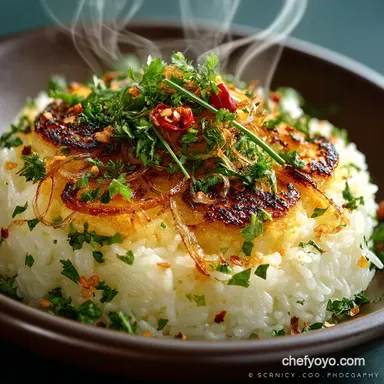
Silken Threads Golden Onion Butter Jasmine Rice the Ultimate Side

- Elevating the Everyday: Why This Golden Onion Butter Jasmine Rice Steals the Show
- Unlocking the Secret to Fluffy, Aromatic Rice
- Essential Elements for the Perfect Golden Onion Butter Infusion
- Prepping Your Pantry: Necessary Tools and Rice Selection
- Mastering the Technique: Step-by-Step Guide to Golden Onion Butter Jasmine Rice
- The Critical Phases of Flavor Layering
- Troubleshooting Your Cook: Common Issues and Quick Fixes
- Extending the Experience: Storage, Reheating, and Scaling Up
- Creative Customizations for Your Aromatic Rice Dish
- Recipe FAQs
- 📝 Recipe Card
Elevating the Everyday: Why This Golden Onion Butter Jasmine Rice Steals the Show
Rice is often relegated to the background, a simple, neutral canvas meant only to absorb the flavors of the main dish. But why shouldn't your side dish be just as exciting? This Golden Onion Butter Jasmine Rice recipe elevates the humble grain into a richly flavored, aromatic, and deeply satisfying dish that easily earns the title of Ultimate Side Dish Rice Recipe .
We move beyond standard steaming and introduce intentional flavor layering, inspired by French riz pilaf techniques combined with the sweet fragrance of Asian pantry staples. The secret lies not in complexity, but in patience, specifically during the initial butter and onion infusion.
This process creates a depth of character, a subtle, almost caramel richness, that transforms a weeknight meal into a celebratory feast.
Unlocking the Secret to Fluffy, Aromatic Rice
Achieving perfectly fluffy, separate rice grains requires adherence to a few non-negotiable rules. While the ingredients are straightforward (Jasmine rice, stock, butter, onions), the technique is what distinguishes this dish.
We utilize the absorption method, but enhance it substantially by cooking the rice directly in the infused fat, a step critical for achieving the signature silken threads texture and ensuring every grain is coated in flavor before the liquid is even added.
A Flavor Profile Breakdown: Savory, Sweet, and Nutty Notes
The characteristic taste of this dish is a wonderful balancing act. The combination of unsalted butter and quality stock creates a luxurious base, while the star component, the caramelized onions, lends an inherent, slow-cooked sweetness.
This savory depth is beautifully complemented by the nutty, floral undertones of the Jasmine rice itself. The result is a truly savory golden onion butter jasmine rice that tastes complex despite its simple origins, offering far more dimension than conventional steamed rice.
The Crucial Role of Slow Caramelization for Deep Flavor
The "Golden Onion" component of this Onion Infused Rice Side Dish is the true game-changer and the element that necessitates the most patience. We must gently sauté the diced yellow onion (about 200g or 1 large) in 2 Tbsp of melted unsalted butter and 1 Tbsp of olive oil for a full 15 to 20 minutes over medium-low heat.
This low-and-slow cooking approach allows the natural sugars in the onion to caramelize without burning, resulting in a rich, non-bitter sweetness. Rushing this initial phase will yield harsh, undercooked onions that detract from the final smooth flavor profile.
Comparing Silken Threads Rice to Standard Steamed Methods
Standard steamed rice involves boiling the grains in a pot of water until cooked, often yielding a slightly sticky or bland result. Our method, conversely, is a modified pilaf technique.
By toasting the rinsed Jasmine rice grains (1 1/2 cups) in the rendered onion butter before adding the liquid, we seal the exterior of the grains. This process, known as pilaflar or "toasting," helps prevent the rice from releasing too much starch during cooking, which in turn leads to fluffy, separated grains that truly resemble silken threads.
On top of that,, for those wondering, do you put butter in jasmine rice ? The answer is emphatically yes, but only as part of an initial fat infusion, not merely stirring in a cold pat at the end.
Essential Elements for the Perfect Golden Onion Butter Infusion
The secret to maximizing the rich flavor of this dish involves a two-stage application of the butter and onions. We don't just cook the rice in the onion fat; we create a finishing element. The first 2 Tbsp of butter and 1 Tbsp of olive oil are used to render the onions until deep gold.
Half of these finished onions are reserved and tossed with the remaining 2 Tbsp of fresh, melted unsalted butter. This "finishing butter" component is folded into the rice after it has fully cooked and rested, guaranteeing that the fresh, aromatic taste of the butter remains prominent, moistening the grains and enhancing the depth of the flavor without making the rice greasy.
Prepping Your Pantry: Necessary Tools and Rice Selection
Success starts with solid preparation, covering everything from grain selection to the right kitchen tools.
Selecting the Right Jasmine Variety for Maximum Fragrance
For this Butter Jasmine Rice Recipe , selecting a high-quality, fragrant Jasmine rice (300g or 1 1/2 cups) is crucial. Jasmine rice, known for its subtle, popcorn-like fragrance, holds up beautifully in the pilaf method.
While Basmati can work in a pinch, Jasmine provides the signature aroma that makes this Golden Onion Butter Jasmine Rice shine.
The Unsung Hero: Why Rinsing the Starch Matters
Rinsing the rice is arguably the single most important preparatory step for achieving a fluffy texture. Surface starch, if left on the grains, turns gummy when heated. Place the rice in a fine-mesh sieve and rinse under cold running water for several minutes until the water runs completely clear.
This small act prevents sticky clumps and ensures maximum fluffiness.
Must-Have Kitchen Gear for Pilaf Perfection
You will need a heavy-bottomed saucepan with a tight-fitting lid to ensure even heat distribution and trap steam effectively. A fine-mesh sieve is necessary for rinsing the rice, and a sturdy wooden spoon is needed for the initial sauté.
Crucially, have a fork ready for the final step, as it prevents crushing the delicate cooked grains.
Substitutions: Can I Use Shallots Instead of Onions?
Absolutely. Shallots are an excellent substitution for yellow onions. Use approximately 2 medium shallots (200g) in place of the one large onion. Shallots offer a slightly milder, sweeter flavor profile and tend to caramelize slightly faster, requiring perhaps 12–15 minutes instead of 20, but the overall technique remains the same.
Related Recipes Worth Trying
- FailProof Fluffy Jasmine Rice Perfect Water Ratio and Steam Method — Stop serving gummy rice Our foolproof guide to perfect jasmine rice cooking uses the proper ratio 1125 and the essential steam method Achieve fragrant...
- Silky Swiss Meringue Buttercream Stable Smooth Icing for Cake SMBC — Ditch the sickly sweet icing This professional Swiss Meringue Buttercream is perfectly stable less sweet and transforms into a velvety smooth icing recipe...
- Foolproof American Buttercream Frosting The Ultimate Easy Cake Recipe — Achieve perfectly stable super smooth American Buttercream Frosting This easy recipe is ideal for piping and holds its shape beautifully Salt cuts the...
Mastering the Technique: step-by-step Guide to Golden Onion Butter Jasmine Rice
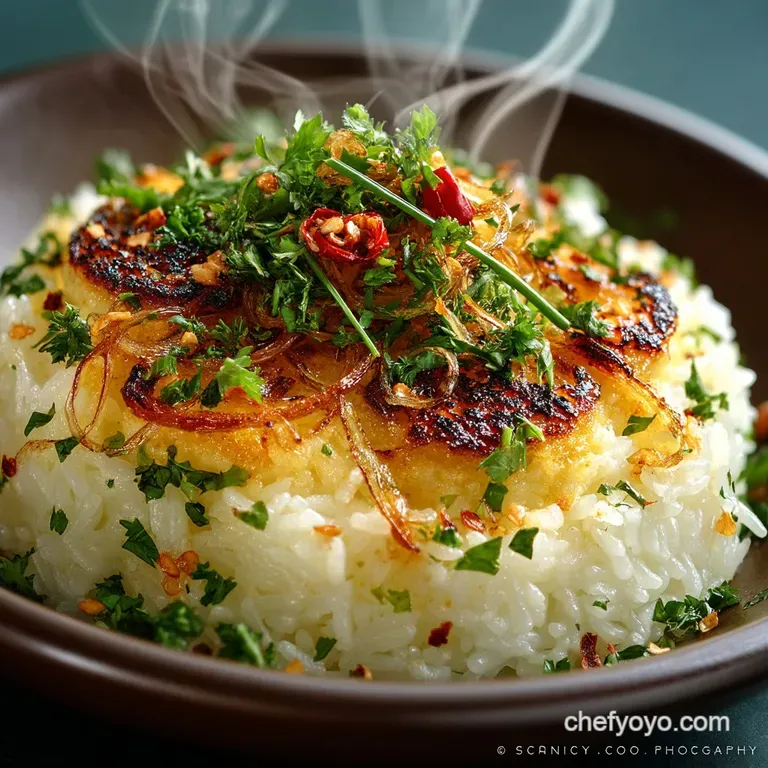
The overall process is divided into three distinct phases: creating the flavor base, cooking the rice using the absorption method, and finally, layering in the finishing butter. This technique, though detailed, is classified as easy, provided you respect the cooking times, especially the slow sauté of the onions.
The total time investment is around 45 minutes, split between 10 minutes of active prep (chopping, rinsing) and 35 minutes of hands-on cooking and mandatory resting.
The Critical Phases of Flavor Layering
Phase I: Achieving the Deep Gold Onion Foundation
Start by melting 2 Tbsp of unsalted butter and 1 Tbsp of olive oil in a skillet over medium-low heat. Add the finely diced onions and 1/4 tsp of sea salt. Cook them slowly, stirring often, for 15–20 minutes until they achieve a deep golden hue and are completely softened.
This process extracts maximum flavor. Add 2 cloves of minced garlic during the final minute of cooking until fragrant. Once done, remove half of this rich onion mixture and set it aside to be used later as the signature finishing touch.
Phase II: Toasting the Rice (The Sauté Step)
Using the same pan with the remaining onion-butter mixture, increase the heat to medium. Add the well-drained, rinsed rice. Sauté and stir continuously for 1 to 2 minutes. The grains should smell nutty and become slightly translucent around the edges.
This toasting step is vital for locking in the flavor and ensuring the final texture is light and fluffy.
Determining the Ideal Liquid Ratio for Pilaf Cooking
For 1 1/2 cups of Jasmine rice, the perfect absorption ratio is 2 cups (480 mL) of low-sodium chicken or vegetable stock. This ratio ensures all the liquid is absorbed while allowing enough steam for cooking. Pour in the stock, along with the remaining 3/4 tsp of fine sea salt. Bring the mixture to a rapid boil.
Immediately reduce the heat to the absolute lowest setting, cover the pot tightly, and cook undisturbed for exactly 12 minutes.
The Non-Negotiable Rest: Ensuring Fluffy, Separate Grains
Once the 12 minutes of simmering are complete, remove the saucepan from the heat, but do not lift the lid. The rice must rest, covered, for a further 10 minutes.
During this crucial resting period, the residual steam finishes cooking the top layers of rice, and the internal moisture equalizes, preventing stickiness. While the rice rests, melt the remaining 2 Tbsp of unsalted butter and pour it over the previously reserved golden onion mixture.
When the rest time is up, gently fluff the rice with a fork and fold in the prepared Golden Onion Butter mixture until seamlessly integrated.
Troubleshooting Your Cook: Common Issues and Quick Fixes
The most common failure point for absorption-method rice is usually moisture imbalance. If your rice is still hard or crunchy after the 10-minute rest, it means it was either not simmering low enough or the liquid evaporated too quickly.
To fix this, add 1 to 2 tablespoons of extra stock, replace the lid, and cook on the lowest setting for an additional 2–3 minutes, followed by another 5-minute rest.
If the bottom is scorched, your heat was too high during the 12-minute simmer phase; gently scoop the fluffy top layers out, leaving the burned bottom behind.
Extending the Experience: Storage, Reheating, and Scaling Up
This recipe yields four generous servings, making it perfect for meal prepping or entertaining. If you are planning to serve a large gathering, the recipe can be scaled up linearly.
For very large batches, you might consider preparing it as Baked Jasmine Rice , using a covered casserole dish in a 350°F (175°C) oven after the toasting step, which often ensures more even cooking for large volumes.
Creative Customizations for Your Aromatic Rice Dish
While this recipe is excellent as written, it provides a fantastic base for further flavor experimentation.
Preventing Sticky Clumps: Troubleshooting Too Much Moisture
To reiterate, sticky clumps are usually the result of failing to properly rinse the starch, or breaking the seal during the initial 12-minute simmer and subsequent 10-minute rest. Never lift the lid! Plus,, always use a fork, not a spoon, to gently fluff the rice after cooking.
Forks separate the individual grains without crushing the exterior, maintaining the desired "silken threads" texture.
Nutritional Snapshot and Ideal Meal Pairing Suggestions
Based on the ingredients, each serving (assuming 4 servings total) averages 350 to 400 kilocalories. This Golden Onion Butter Jasmine Rice is rich, comforting, and carbohydrate-forward, making it an excellent accompaniment to lighter proteins.
It pairs beautifully with a simple Pan-Seared Lemon Herb Chicken Breast or a flaky, Baked Salmon Fillet . Its richness also stands up well against a mild Sweet Chilli Glaze or the richness of a Coconut Curry.
Adding Protein or Vegetables: Building a Complete Plate
To transform this side dish into a complete meal, fold in cooked protein or blanched vegetables at the final fluffing stage. Diced, shredded rotisserie chicken or pan-seared tofu works well. For vegetables, try blanched Tenderstem Broccoli or finely chopped bell peppers.
If you are wondering what seasoning can i add to jasmine rice beyond the butter and onions, consider stirring in 1/2 teaspoon of dried thyme or oregano, or adding a pinch of red pepper flakes along with the garlic for a touch of heat.
Shelf Life: Safely Storing Leftover Golden Onion Butter Jasmine Rice
Cooked rice must be handled safely. Cool leftover rice quickly (ideally within one hour) and store it in an airtight container in the refrigerator for 3 to 4 days. When reheating, add a tablespoon of stock or water to restore moisture and cover loosely to steam the rice gently, ensuring it doesn't dry out.
Recipe FAQs
Why bother rinsing the Jasmine rice? Isn't that a bit of a palaver for a side dish?
Rinsing is the secret sauce to avoiding a sticky wicket! It washes away the excess starch on the surface of the grains, which otherwise turns gloopy when cooked. This simple prep step ensures you achieve that classic, fluffy, separate grain texture, absolutely essential if you want this butter rice to truly shine, rather than ending up as a clumpy mess.
The recipe calls for 20 minutes just for the onions, is that really necessary for the Golden Onion Butter Jasmine Rice?
Yes, absolutely crucial! That slow, gentle cooking transforms the harsh, sharp flavour of raw onion into a deep, savoury sweetness, infusing the butter thoroughly before the rice is added. If you rush this step, you lose the signature 'golden' depth that defines the dish.
It's the difference between a bog-standard side and a genuinely exquisite one.
I'm trying to cut back on dairy. Is there a simple swap for the generous helping of butter?
Certainly! You can easily swap the unsalted butter for high-quality olive oil or a robust vegan butter alternative. If you go the vegan route, you might want to slightly increase the quantity (perhaps 5 Tbsp total) to maintain that lovely, mouth-filling richness that makes this side dish so satisfying.
I haven't got Jasmine rice. Can I use Basmati or another type instead, or will it be a complete car crash?
Good news: Basmati rice works a treat, often yielding similar fluffy results using the exact same absorption method and timings. However, you must steer clear of short-grain or sticky rice varieties like Arborio, which are far too starchy for this technique. Stick to long-grain rice for guaranteed perfection.
I fancy serving this up tomorrow. Can I make this rice ahead of time, and how should I store it safely?
While it is best served immediately, you can store leftovers safely. Cool the rice quickly (within an hour) and place it in an airtight container in the fridge for up to three days.
For safety, always ensure you reheat the rice thoroughly until it is steaming hot throughout before serving again, no one wants a dodgy tummy from leftover rice!
Silken Golden Onion Butter Jasmine Rice The Ultimate Side Dish Recipe