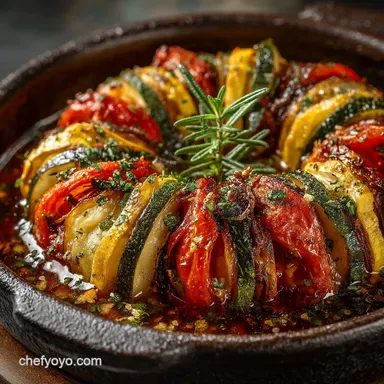
The Riviera Rhapsody Elegant Slowbaked Ratatouille Provençal
Moving Beyond the Stew: Mastering the Elegant Baked Ratatouille
While many diners are familiar with ratatouille as a comforting, slightly chunky French vegetable stew, the truly magnificent expression of this Provençal classic lies in the oven.
This Baked Ratatouille method elevates the humble combination of seasonal vegetables into a stunning, uniform dish a true showstopper among Fancy Dishes To Make .
By transforming the ingredients from an unstructured simmer into a tightly arranged Ratatouille Casserole Recipe , we concentrate the flavors and achieve a textural experience that is simultaneously soft, slightly caramelised, and incredibly vibrant.
This process demands patience, but the resulting depth of flavor and the elegant presentation are well worth the dedicated preparation time of about 45 minutes.
The Provençal Secret: Why Slow Baking Changes Everything
The magic behind the Baked Ratatouille Recipe lies in the slow, regulated heat of the oven, which facilitates a gentle "confit" process. Unlike stovetop methods where the vegetables are prone to leaching moisture quickly and becoming overly mushy, the covered bake at 350°F (175°C) allows the natural sugars in the tomatoes, peppers, and onions to caramelise slowly on the bottom, while the layered slices steam in their own juices above.
This controlled environment locks in the essential oils and moisture, resulting in a meltingly tender vegetable texture that retains its shape, crucial for the aesthetic appeal of the dish.
For enthusiasts of sophisticated oven roasted Meals , this technique is a powerful tool for developing complexity without heavy interference.
Deconstructing the Confit Byaldi Presentation
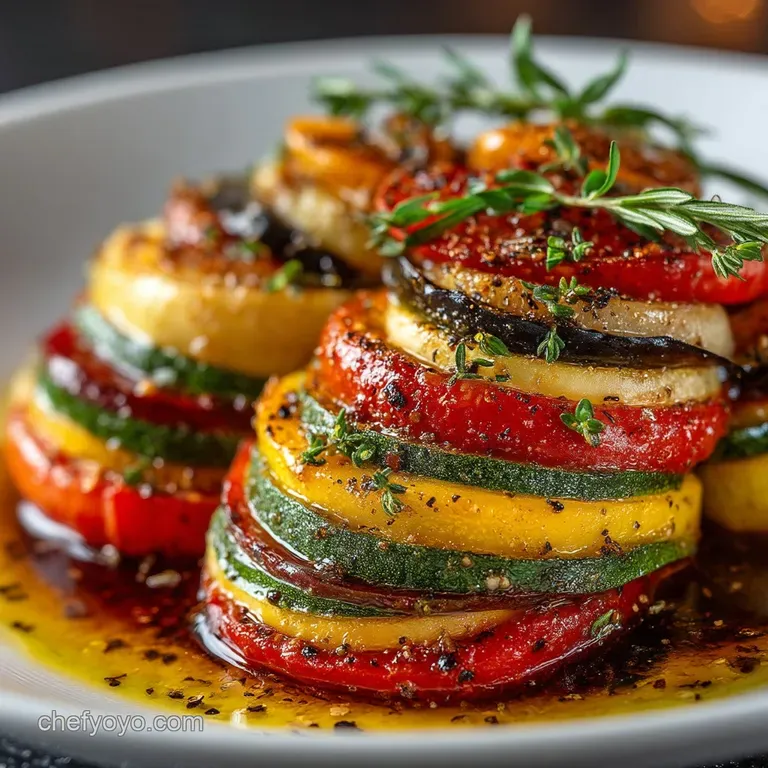
The presentation we aim for is technically called Confit Byaldi , a sophisticated arrangement of thinly sliced vegetables overlapping in concentric circles or neat rows atop a rich sauce base.
The key is ensuring consistency in the vegetable dimensions, allowing the aubergine, courgette, and tomato slices to hug the baking dish uniformly. This visual structure provides a dramatic flair, ensuring that every slice is perfectly cooked and seasoned, rather than merely mingling with the sauce.
While many associate this style with its appearance in popular culture, its roots are deep in refined French cooking, demonstrating that even simple produce can be rendered spectacular.
Is This Dish Vegan? Understanding Its Traditional Identity
Absolutely. The traditional identity of ratatouille is inherently plant based. The core components aubergine, courgette, bell peppers, onions, tomatoes, and herbs are entirely vegetable driven. The only fat used is extra virgin olive oil, which is suitable for vegan diets.
When preparing the core Baked Ratatouille With Tomatoes Zucchini And Eggplant , it remains naturally vegan, making it an excellent centerpiece for diverse dietary needs.
Any optional variations, such as the later addition of crumbled cheese, are entirely post cooking considerations and not integral to the classic dish itself.
Sourcing the Sunshine: Essential Produce and Prep Tools
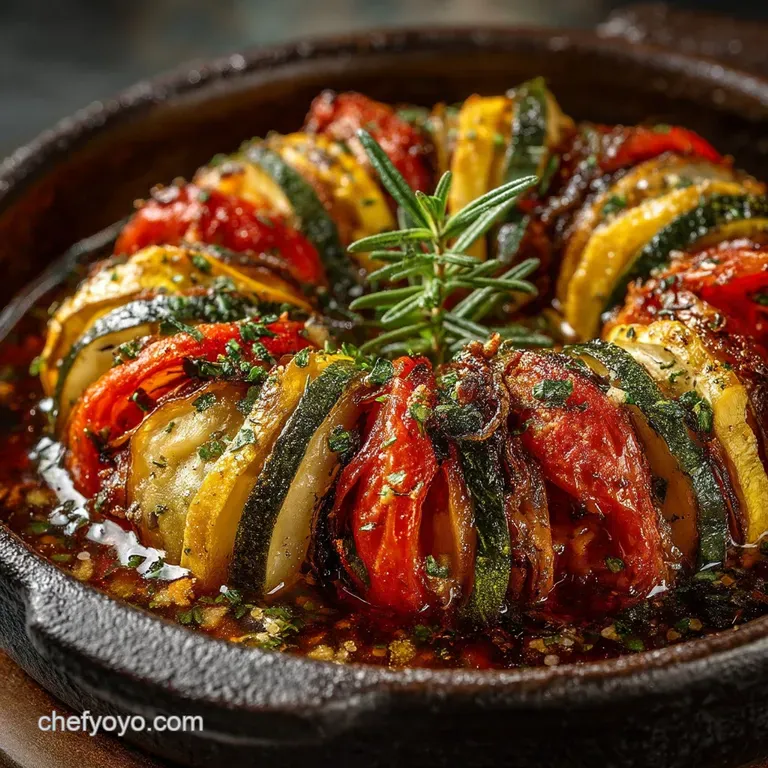
The quality of this dish is determined not by complex technique, but by the ingredients you choose. Given the high ratio of fresh produce, we must source vibrant, seasonal vegetables that are firm, fragrant, and similar in size to ensure smooth layering and even cooking.
Building the Flavor Foundation: Ingredients for the Piperade Sauce
Every great casserole needs a robust base, and for this recipe, that foundation is the piperade a thick, earthy sauce made from sautéed onions, red and yellow bell peppers, garlic, and diced tomatoes.
We start by softening the onion and peppers in olive oil, then adding aromatics like minced garlic, oregano, and a touch of smoked paprika for depth. Simmering this mixture for a full 15 to 20 minutes is critical; it must reduce significantly to create a dense, slightly sticky bedding that can support the stacked vegetables without becoming watery during the bake.
We utilize four large, ripe tomatoes for this base, or a 14.5 oz can of quality crushed tomatoes if fresh ones are out of season, guaranteeing that essential sun-drenched flavor.
Selecting the Perfect Trio: Courgettes, Tomatoes, and Aubergine
For the sliced element of the Baked Ratatouille With Tomatoes Zucchini And Eggplant , uniformity is key. You'll need two medium aubergines (eggplants), two green courgettes (zucchinis), two yellow courgettes, and four to five firm tomatoes.
Crucially, try to select produce that is roughly the same diameter ideally between 2.5 and 3 inches. This ensures a clean, tight overlap when assembling the casserole. If the aubergine seems bitter, employ a common chef's trick: slice them first, salt heavily, allow them to drain in a colander for half an hour, then rinse and pat dry before continuing preparation.
This minimizes bitterness and stops the slices from absorbing excessive oil.
Recommended Equipment for Uniform Slicing
Achieving the required ⅛ inch (3mm) slice thickness is where many home cooks struggle, resulting in uneven cooking. While a very sharp chef's knife can accomplish the task with time and precision, a mandoline slicer is the recommended equipment for this dish.
A mandoline guarantees consistent thickness across all vegetables, ensuring that the entire dish finishes cooking at the exact same moment, creating that signature melting texture without any raw or overly tough pieces.
You will also need a 9 inch round or rectangular deep baking dish (or a sturdy cast iron skillet) to house this beautiful assembly.
Related Recipes Worth Trying
- The Proper Job Loaded Baked Potato Soup Ultimate Cheesy Creamy Recipe — Our foolproof Loaded Baked Potato Soup recipe starts with baked spuds for deep smoky flavor This hearty creamy bowl is perfect for a miserable afternoon...
- Cranberry Apple TwiceBaked Sweet Potatoes Fluffy Autumn Side Dish — Master the art of Cranberry Apple TwiceBaked Sweet Potatoes Fluffy creamy and packed with sweet potatoes apples cranberries this side dish is a showstopper...
- LemonDill Oven Baked Salmon Flaky Moist and Ready in Just 25 Minutes — Looking for the Best Oven Baked Salmon This speedy recipe shows you How To Bake Salmon Fillets In Oven for a flaky tender finish every time Simple...
From Raw Produce to Rhapsody: A step-by-step Guide to Baked Ratatouille
The process is divided into three distinct stages: preparing the deeply flavored sauce, meticulously assembling the layers, and finally, the slow bake that transforms the dish.
Simmering the Earthy Piperade Base
Begin the Baked Ratatouille Recipe by creating the sauce. In a large skillet, sauté the diced yellow onion in olive oil until fully translucent. Next, introduce the red and yellow bell peppers, cooking them until they begin to soften.
Once the peppers are ready, stir in the minced garlic and dried herbs, cooking just until fragrant about one minute. The diced tomatoes (fresh or canned), salt, and pepper follow, along with fresh thyme sprigs.
Bring this mixture to a bubble, then reduce the heat and let it simmer for 15 to 20 minutes. This extended simmer significantly thickens the piperade, concentrating the sugars and spices.
Once thickened, spread this rich base evenly across the bottom of your chosen baking dish; this is the comfortable bed for your layered vegetables.
The Art of Assembly: Layering the Vegetables
With the piperade spread out, the decorative assembly begins. Take the uniformly sliced aubergine, green and yellow courgettes, and tomatoes. The goal is to arrange them in a repeating pattern (aubergine, tomato, green courgette, yellow courgette) starting at the outer edge of the dish and working inward, overlapping each slice slightly so only about a quarter inch of each vegetable is visible.
This meticulous layering is what elevates this dish beyond a simple Ratatouille Casserole Recipe . Once the dish is completely filled, drizzle the arrangement with the remaining olive oil and season lightly with the finishing salt and pepper mixture.
Temperature and Timing: Achieving the Signature Melting Texture
The initial baking phase is key to achieving that soft, confit texture. Preheat your oven to 350°F (175°C). Before placing the dish in the oven, cover the layered vegetables directly with a piece of parchment paper cut to size.
This parchment paper acts as a gentle lid, trapping steam and preventing the delicate vegetable edges from drying out or burning during the first phase. Bake covered for 45 minutes. After this time, the vegetables should be tender but still holding their form.
Remove the parchment paper and continue baking for another 20 to 30 minutes uncovered. This final period allows excess moisture to evaporate, thickens the sauce further, and encourages a light caramelisation around the edges of the slices.
Mastering the Finish: Troubleshooting, Storage, and Serving
The final steps are just as important as the preparation, ensuring the dish sets correctly and allowing for personalized finishes.
Elegant Variations: Adding Cheese or Herbs Post Bake
While beautiful on its own, this baked preparation lends itself perfectly to enhancements. For a richer, more complex flavor profile, you can easily create Baked Ratatouille With Cheese .
Simply sprinkle half a cup of crumbled soft goat cheese or grated Parmesan over the exposed vegetables during the final 15 minutes of the uncovered bake. The Baked Ratatouille And Goats Cheese variation adds a salty tang that beautifully complements the sweetness of the roasted peppers and tomatoes.
Alternatively, stick to fresh herbs: a chiffonade of basil or parsley sprinkled on top after resting adds a crucial burst of color and fresh perfume, contrasting the deep, slow cooked flavors.
Nutritional Breakdown: Analyzing the Provençal Vegetable Profile
The beauty of this slow baked dish is its inherent nutritional value. Based on approximately six servings, this ratatouille is rich in dietary fiber (around 6g per serving) and loaded with vitamins and antioxidants from the dark hued aubergine and vibrant bell peppers.
With the fat content primarily coming from unsaturated olive oil, the estimated calorie count remains modest, typically falling between 180 and 220 kcal per serving. It offers a low-carb, nutrient dense profile that makes it a guilt free yet incredibly satisfying accompaniment to grilled fish, chicken, or served simply with crusty bread.
Keeping It Fresh: Proper Storage and Reheating Tips
Once removed from the oven, do not be tempted to serve the ratatouille immediately. Allowing the dish to rest for a mandatory 10 minutes is essential; this cooling time permits the cooking juices to settle back into the piperade base and allows the vegetable structure to firm up slightly, ensuring clean serving portions.
Leftovers should be cooled completely and stored in an airtight container in the refrigerator, where they will keep well for up to three days. When reheating, place the desired portion back into an oven safe dish, cover lightly with foil, and warm through at 300°F (150°C) until piping hot.
The flavors, having had time to meld, often deepen overnight, making this an ideal dish for meal preparation.
Recipe FAQs
I haven't got a mandoline, what's the trick to getting the slices thin and uniform for this Baked Ratatouille?
If you're tackling this without a mandoline, you’ll need a truly sharp chef’s knife and a steady hand think precision, not speed. Aim for slices that are about the thickness of a pound coin (1/8 inch / 3mm).
Consistency is absolutely vital here; uneven thickness is a recipe for a spot of bother, leaving you with some crunchy bits and some overly soft bits.
Can I prep this ratatouille the day before, or is it okay to freeze leftovers?
You can certainly prep the sauce base (the piperade) up to three days ahead and store it in the fridge. However, assembling the dish with the sliced raw vegetables should only be done a few hours before baking.
As for leftovers, freezing the cooked ratatouille is fine, though be warned that the delicate texture of the courgettes might be a bit softer upon reheating.
I can't find yellow courgettes; is it a massive culinary faux pas if I just use green ones?
Not at all! It’s traditional in Provence to use whatever fresh, seasonal vegetables you have to hand. The yellow courgette is mainly used in this elegant arrangement for a wonderful aesthetic flair it looks smashing, doesn't it?
Feel free to double up on the green courgettes or use a similar summer squash; the glorious flavour profile won't suffer a jot.
This looks lovely, but how do I turn it from a fancy side dish into a proper, hearty main meal?
If you need this vibrant dish to pull main course duty, you have a couple of easy options. Try laying thin slices of cured sausage (like chorizo) directly under the sauce base before assembly for a meaty flavour.
Alternatively, serve a generous portion topped with a poached egg, or crumble goat cheese or feta over the top during the last 15 minutes of baking for a protein boost.
Why do we use parchment paper when baking, and how do I stop the vegetables from turning into mush?
The parchment paper acts as a gentle steamer, or a ‘lid’, and is your best friend here. It locks in the moisture released by the vegetables during the initial 45 minutes of baking, preventing the top slices from drying out or burning.
This technique is essential for achieving that wonderfully soft, 'confit' texture where the vegetables melt together, rather than turning into an overcooked stew.
Elegant Slowbaked Ratatouille Casserole